
Huntr Research
The Best Job Boards of 2026, Ranked by Interview Rate
We ranked 25 job boards by interview rate across 1.24 million tracked applications. Google Jobs converts at more than 3x LinkedIn's rate. See the full ranking.
Most lists of the top job boards rank them by traffic, or by whoever paid to be there. That answers a question nobody asked. The question that matters to a job seeker is simpler: which sites turn applications into interviews? So that is how we ranked them.
Job seekers on Huntr tracked 1.24 million applications across 25 major job sites and job boards between October 1, 2024 and July 1, 2026. Each tracked job records the site it came from and whether it reached an interview. That lets us measure an interview rate per application for every major board, from LinkedIn to GovernmentJobs.
The short version: Google Jobs converts at 6.6%, more than triple LinkedIn's 1.95%. Niche and regional boards beat the giants. And the sites that make applying easiest land the fewest interviews. Easy in, easy out.
Quick picks: where to start
- Everyone: Google Jobs. 6.6% interview rate, and it routes you to the employer's own application form.
- Students and new grads: Handshake. 3.1%, with employers who came specifically to hire from campuses.
- Startup jobs: Wellfound. 3.75%, and applications often reach founders directly.
- US public sector: GovernmentJobs. 7.28%, the best rate we measured.
- Outside the US: the regional leader wherever you live. Seek in Australia and New Zealand (5.16%), Magneto (4.09%) and Computrabajo (3.29%) in Latin America, Welcome to the Jungle (3.78%) and HelloWork (2.71%) in France.
Keep LinkedIn for discovery. When a listing gives you the choice, apply on the company's own site.
Jump to the full ranking, what changed in Q2 2026, the pattern behind the ranking, or the methodology.
How we ranked the job boards
For every application tracked in Huntr, we know the domain of the job posting and whether that application led to at least one interview. Interview rate is the share of applications from a site that reached an interview. We ranked every site with at least 1,000 tracked applications, the same bar we used in the Q1 2026 Job Search Trends Report. For the Q2 2026 cut we lowered the bar to 200 applications, since a single quarter has less volume. The ranking covers job boards and job search sites only. Applications through applicant tracking systems and employer career pages are grouped separately later in this report.
One caution before the table. An interview rate measures the board and the people on it. A site built for one-click bulk applying will always convert worse than one where each application takes work. That is not a footnote; it is half the story of this ranking, and it is the half you control.
Best job boards of 2026, ranked
| Rank | Job site | Applications | Interviews | Interview rate |
| 1 | GovernmentJobs | 1,607 | 117 | 7.28% |
| 2 | Google Jobs | 4,575 | 302 | 6.60% |
| 3 | Seek | 2,094 | 108 | 5.16% |
| 4 | Magneto | 1,150 | 47 | 4.09% |
| 5 | Welcome to the Jungle | 7,727 | 292 | 3.78% |
| 6 | Wellfound | 4,558 | 171 | 3.75% |
| 7 | Computrabajo | 3,528 | 116 | 3.29% |
| 8 | Handshake | 3,610 | 112 | 3.10% |
| 9 | Indeed | 86,107 | 2,516 | 2.92% |
| 10 | Glassdoor | 15,209 | 439 | 2.89% |
| 11 | HelloWork | 1,548 | 42 | 2.71% |
| 12 | Glassdoor Canada | 1,844 | 44 | 2.39% |
| 13 | Work at a Startup | 1,969 | 47 | 2.39% |
| 14 | Elempleo | 9,028 | 209 | 2.32% |
| 15 | 970,190 | 18,920 | 1.95% | |
| 16 | Built In | 3,083 | 59 | 1.91% |
| 17 | Jobright | 2,064 | 31 | 1.50% |
| 18 | Totaljobs | 1,740 | 23 | 1.32% |
| 19 | ZipRecruiter | 24,065 | 269 | 1.12% |
| 20 | Reed | 1,692 | 17 | 1.00% |
| 21 | CV-Library | 1,545 | 12 | 0.78% |
| 22 | Glassdoor India | 2,674 | 16 | 0.60% |
| 23 | SimplyHired | 4,560 | 13 | 0.29% |
| 24 | Hiring Cafe | 14,192 | 26 | 0.18% |
| 25 | Dice | 74,295 | 93 | 0.13% |
Read the smaller sites with care. GovernmentJobs tops the table on 1,607 applications, a solid sample but a rounding error next to LinkedIn's 970,190. Rates on small samples wobble from quarter to quarter, and the top two overlap within the margin of error: GovernmentJobs' 95% confidence interval runs 6.1% to 8.7%, Google's 5.9% to 7.4%. Call it a tie at the top until more data settles it.
1. GovernmentJobs: 7.28% interview rate
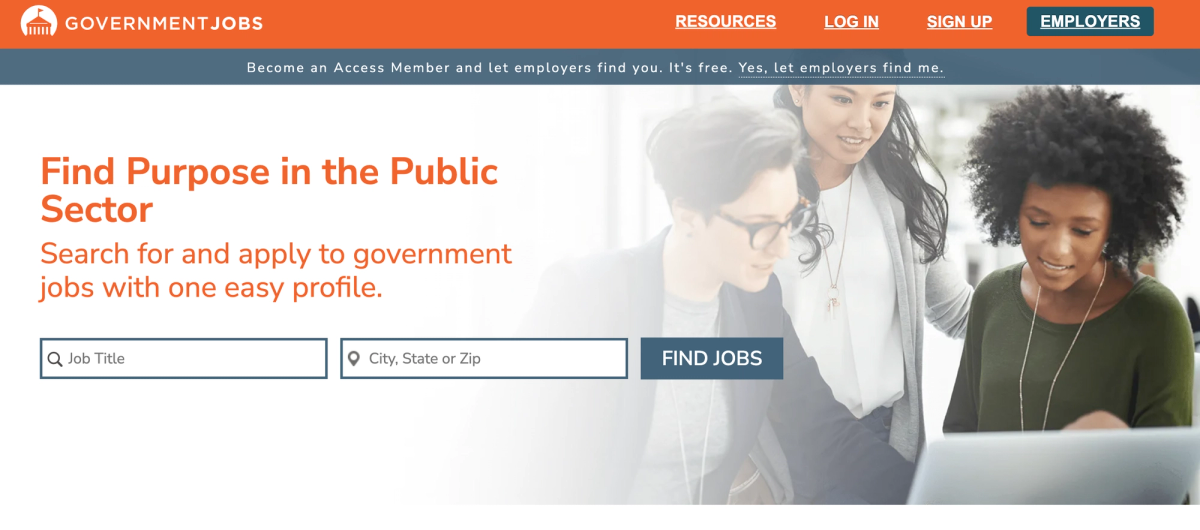
The best-converting job board in our data: one interview for every 14 applications. Public sector hiring is structured. Postings list real requirements, screeners score applications against them, and qualified candidates get scheduled. Fewer people compete per posting than on the big boards. Boring process, great odds.
Who it's for: Anyone open to public sector work in the US. City, county, and state agencies hire everything from engineers and nurses to analysts and skilled trades here.
Specializes in: Government hiring run through NEOGOV, the applicant system most US public agencies use. Postings carry real requirements, real salary ranges, and fixed deadlines.
Tip: Mirror the minimum qualifications on your resume line by line; screeners score against a checklist. Answer every supplemental question fully, since short answers get filtered out. And be patient. Government pipelines run on weeks, not days, but the odds here are the best we measured.
2. Google Jobs: 6.60% interview rate
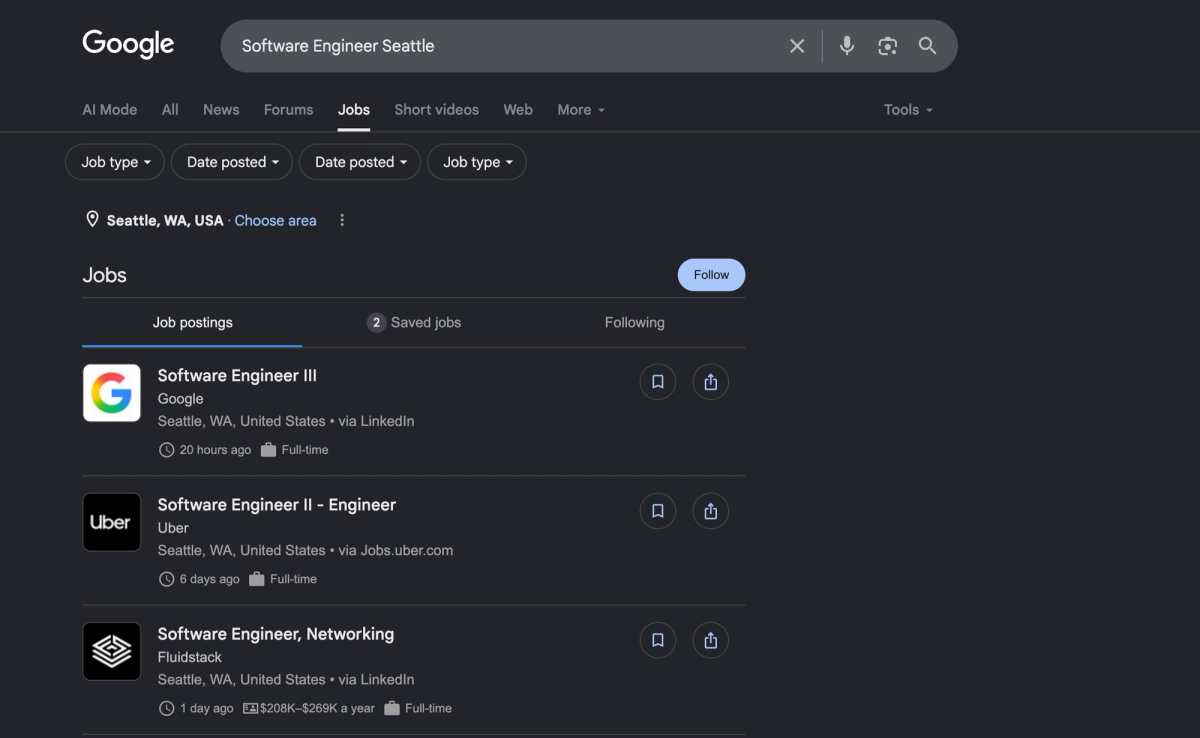
Google pulls postings from employer career pages and nearly every job board on the web, then routes you to the company's own application form. You skip the middle layer and apply at the source. Here is how to pick and use the right job search sites.
Who it's for: Everyone. Any role, any region. If a job is posted anywhere public on the web, Google likely indexes it.
Specializes in: Aggregation. Google pulls postings from employer career pages and nearly every job board, then sends you to the company's own application form.
Tip: Search your target title plus your city on Google and open the jobs panel. Filter to postings from the past three days. When a listing shows several apply options, pick the employer's own site over a board reposting. That one habit alone moves you up this ranking.
3. Seek: 5.16% interview rate
The dominant board in Australia and New Zealand. A strong local market with less bulk-apply behavior than the global giants.
Who it's for: Job seekers in Australia and New Zealand, across every industry and level.
Specializes in: The deepest listing pool in the region, with salary insights and company reviews built in.
Tip: Complete your Seek profile even if you apply with your own resume; recruiters search profiles directly. Set your salary expectations honestly in your settings, and respond fast when a recruiter reaches out.
4. Magneto: 4.09% interview rate
A Latin American job platform growing fast in Colombia and Mexico. Regional boards keep beating global ones in our data.
Who it's for: Job seekers in Colombia and, increasingly, the rest of Latin America.
Specializes in: High-volume hiring for more than 8,000 Latin American employers, with AI matching and application tracking built into the platform.
Tip: Build the full on-platform profile. Employers screen inside Magneto, so a thin profile costs you interviews no matter how strong your resume is.
5. Welcome to the Jungle: 3.78% interview rate
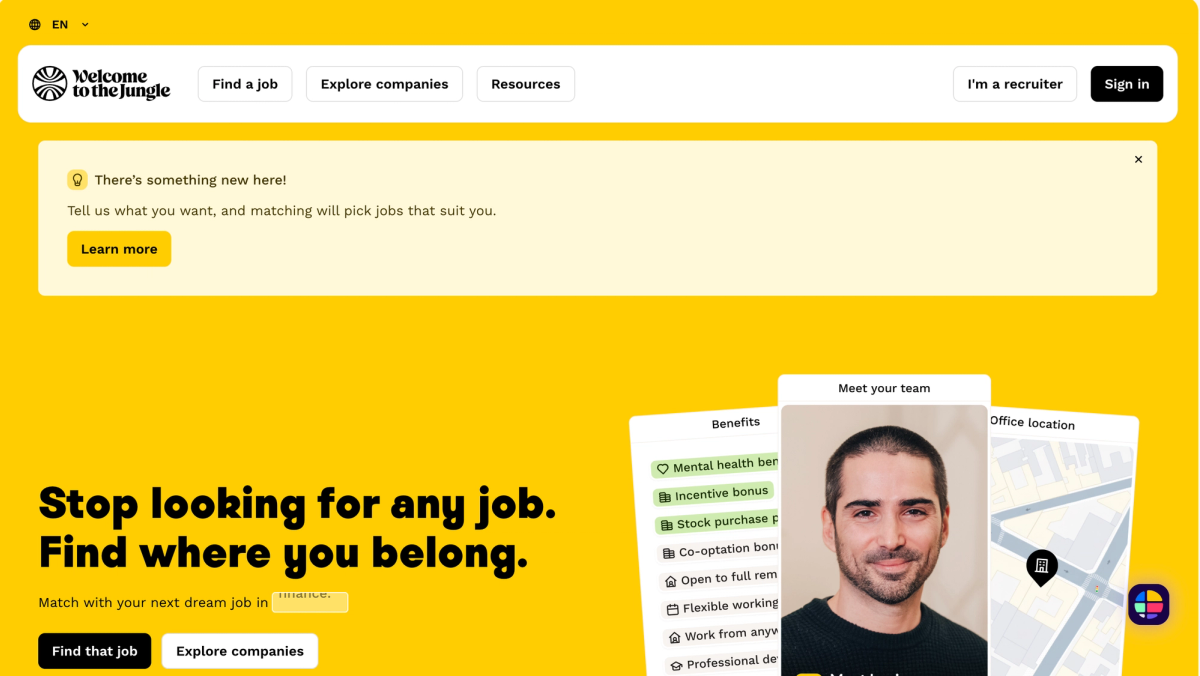
Strong in France and growing in the US. Company profiles run deep, so candidates self-select before they apply. It posted the single best quarter of any site in Q2 2026: 11.89%.
Who it's for: Candidates who choose employers by culture and team, not just title. Strongest in France, growing fast in the US.
Specializes in: Deep company profiles: team interviews, photos, values, and stats alongside the jobs themselves.
Tip: Read the full company profile before you apply and echo its language in your materials. Then reuse the profile to prep your interview; few candidates do, and it shows. Target companies first, titles second.
6. Wellfound: 3.75% interview rate
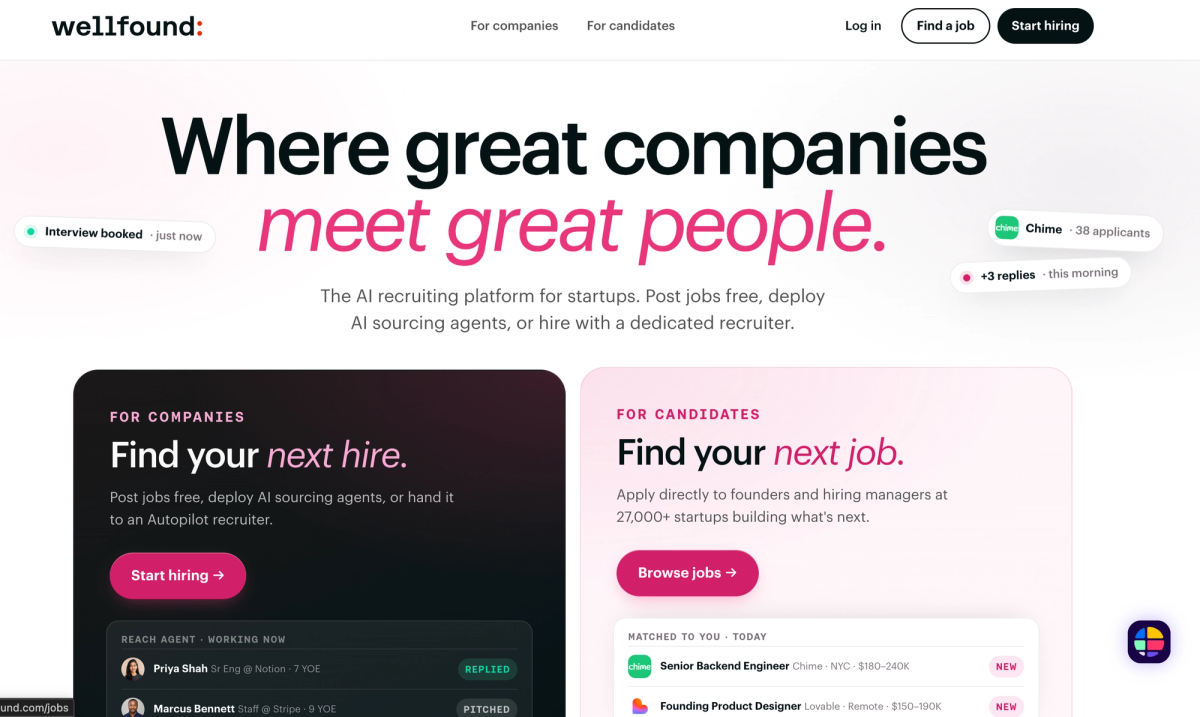
The main startup board, formerly AngelList Talent. Applications often reach founders directly, and startups move faster than enterprise pipelines.
Who it's for: People who want startup work: engineers, designers, product folks, and increasingly sales and ops.
Specializes in: Startup jobs with salary and equity ranges listed up front, and applications that often land directly with a founder.
Tip: Set your profile to actively looking and describe what you have built, not just where you worked. Keep your application note to two or three sentences about why this company. Founders read fast.
7. Computrabajo: 3.29% interview rate

The largest job board in Latin America. Same pattern as Magneto: a focused regional audience converts better than a global one.
Who it's for: Job seekers across Latin America, at every level from entry to management.
Specializes in: Reach. It is the largest job board in the region, spanning nearly every country and sector.
Tip: Apply early; popular postings collect hundreds of applicants within days. Keep your CV in the language of the posting, and set alerts for your target title so you see new roles the day they appear.
8. Handshake: 3.10% interview rate
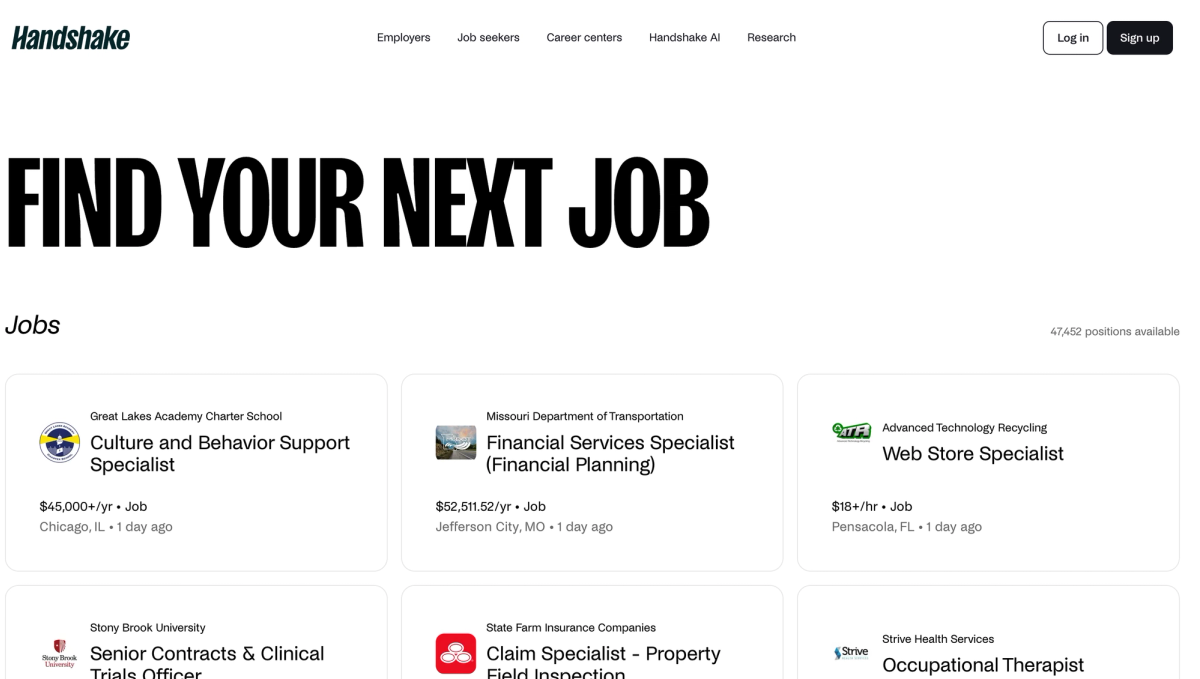
Built for students and new grads, with employers who signed up to hire them. If you are early in your career, this beats the general boards.
Who it's for: Students and new grads whose schools partner with Handshake.
Specializes in: Internships and entry-level roles from employers who specifically came to hire from campuses.
Tip: Complete every profile field. Employers filter by school, major, and graduation year, and incomplete profiles fall out of those searches. Postings targeted at your school convert best, and messaging a recruiter after a campus event is normal here, not pushy.
9. Indeed: 2.92% interview rate
The biggest traditional board, with 86,107 tracked applications. Its rate holds near 3% quarter after quarter, and it reached 3.9% in Q2 2026.
Who it's for: Everyone, and especially candidates outside tech: healthcare, logistics, retail, admin, and skilled trades.
Specializes in: Volume, plus company reviews, salary data, and a resume database recruiters actually search.
Tip: Sort by date, not relevance, and apply in the first few days of a posting. Make your Indeed resume searchable, but where the posting allows it, upload your own tailored version instead of the quick-apply default.
10. Glassdoor: 2.89% interview rate
Better known for company reviews, but its US job board converts on par with Indeed. Its country domains for Canada and India convert lower and are counted separately in the table above.
Who it's for: Candidates who research companies before applying. Strongest in the US.
Specializes in: Company reviews, salary reports, and interview question archives, with a job board attached.
Tip: Use the interview archive before every interview; candidates post the actual questions they got. Check the salary data against the posting's range before you name a number. Then apply at the source when the listing links out.
11. HelloWork: 2.71% interview rate
Who it's for: Job seekers in France, in every sector, with especially strong regional coverage outside Paris.
Specializes in: France's largest homegrown employment platform, formerly RegionsJob, with commute-time search built for French transit.
Tip: Search by commute time rather than city; it surfaces roles other filters miss. Keep your CV in French unless the posting says otherwise, and set alerts by region.
12. Glassdoor Canada: 2.39% interview rate
Who it's for: Canadian job seekers.
Specializes in: The same review, salary, and interview data as Glassdoor US, localized for the Canadian market.
Tip: Use it the same way as the US site: research first, then apply at the source. Its conversion in our data runs a bit below Glassdoor US.
13. Work at a Startup: 2.39% interview rate
Who it's for: Engineers and early hires who want a Y Combinator startup.
Specializes in: One application that reaches hundreds of YC companies at once, reviewed by founders themselves.
Tip: Write your profile like a pitch: what you built, the stack, and what you want next. One strong profile beats fifty applications here, because companies come to you.
14. Elempleo: 2.32% interview rate
Who it's for: Professionals in Colombia and neighboring markets.
Specializes in: One of Colombia's most established boards, heavy on corporate and professional roles.
Tip: Complete the on-site hoja de vida in full; many employers require it and screen within the platform. Pair it with Magneto and Computrabajo to cover the whole Colombian market.
15. LinkedIn: 1.95% interview rate
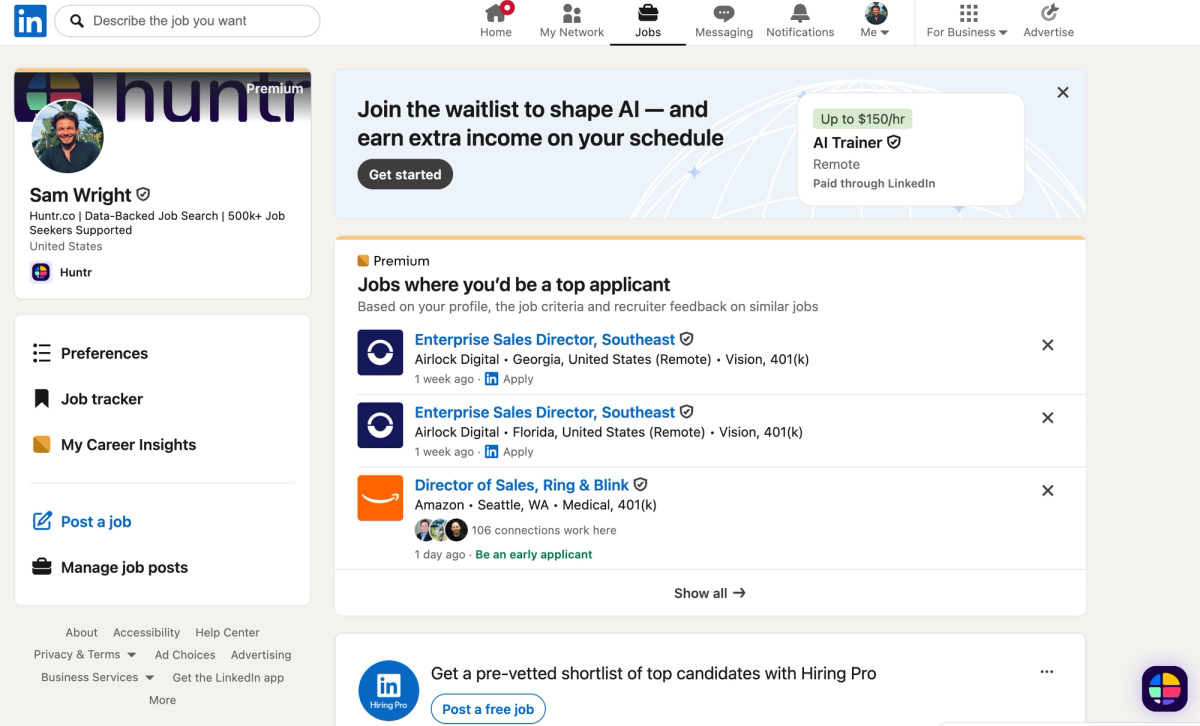
Who it's for: Everyone. It lists more jobs than every other site in our data combined.
Specializes in: The network itself: recruiters, hiring managers, and alumni, attached to a job board.
Tip: Skip the Easy Apply sprees. In our 2025 survey of 1,049 job seekers, 72.5% said Easy Apply produced zero interviews all year. Use LinkedIn to find the job and a human connected to it, then apply on the company site. Full breakdown in the next section.
16. Built In: 1.91% interview rate
Who it's for: Tech workers targeting US tech hubs or remote roles at tech companies.
Specializes in: Local tech scenes: company profiles, funding news, and jobs organized by hub.
Tip: Browse by hub and company stage rather than title alone. Read the company profile first; it tells you the stack and the team before you commit an application.
17. Jobright: 1.50% interview rate
Who it's for: High-volume appliers who want AI to shortlist for them.
Specializes in: AI job matching, resume tools, and referral-finding features layered on an aggregated job feed.
Tip: Use the match scores to build your shortlist, then slow down. Automation finds jobs faster; it does not make any single application stronger. Volume without tailoring converts poorly on every platform in our data.
18. Totaljobs: 1.32% interview rate

Who it's for: UK job seekers across most industries.
Specializes in: One of the UK's biggest generalist boards, part of the StepStone group.
Tip: Use UK CV conventions, set alerts, and apply to fresh postings. Recruiters and agencies search the CV database, so keep yours keyword-current.
19. ZipRecruiter: 1.12% interview rate
Who it's for: US job seekers, with heavy small and mid-sized employer coverage.
Specializes in: Distribution. One posting syndicates across many boards, and one-click applying is the default.
Tip: The one-click default is the trap. Use ZipRecruiter's alerts to find roles, then take the extra ten minutes to apply on the employer's site with a tailored resume.
20. Reed: 1.00% interview rate
Who it's for: UK job seekers, particularly in admin, finance, and public sector roles.
Specializes in: One of the UK's oldest boards, with a large recruiter and agency presence plus a courses marketplace.
Tip: Complete your Reed profile; agencies search the database and often call before you ever apply. Treat recruiter conversations as interviews, because they are.
21. CV-Library: 0.78% interview rate
Who it's for: UK job seekers open to agency-led hiring.
Specializes in: A CV database model: you upload once, and thousands of agencies and employers search.
Tip: Make your CV keyword-rich for the search engine on the other side: job titles, skills, locations. Expect calls, and screen them; quality varies with the agency.
22. Glassdoor India: 0.60% interview rate
Who it's for: Job seekers in India.
Specializes in: Glassdoor's review, salary, and interview data localized for the Indian market.
Tip: Its conversion in our data is low, so use it for what it does best: researching employers and interview questions. Then apply through the company's own careers page.
23. SimplyHired: 0.29% interview rate
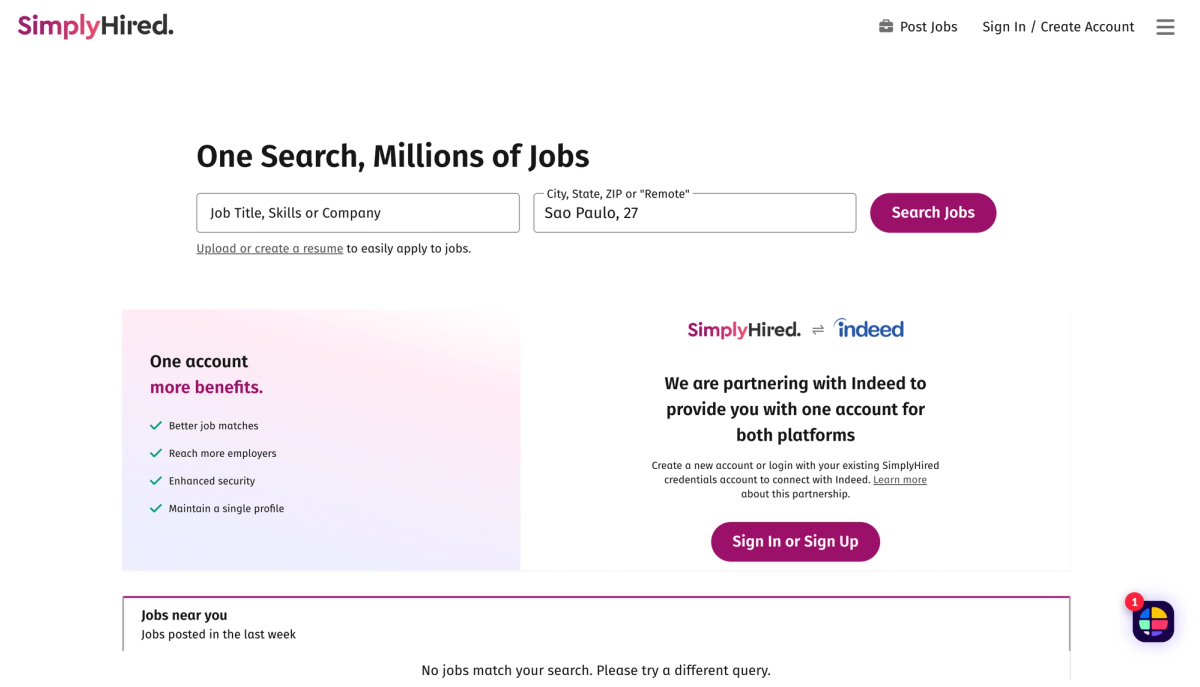
Who it's for: Casual browsers who want the widest possible net.
Specializes in: Aggregation across the Indeed network; most listings redirect elsewhere.
Tip: Treat it as a discovery layer. Find the role here, then follow it to the source and apply there. Do not stop at the redirect.
24. Hiring Cafe: 0.18% interview rate
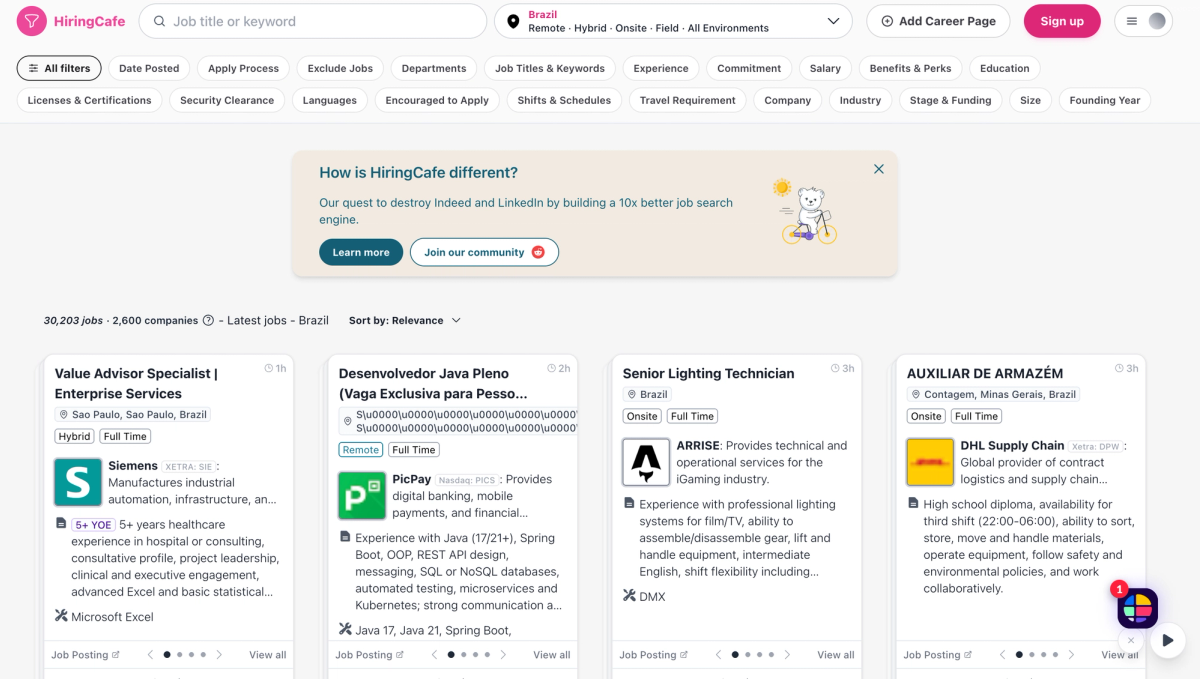
Who it's for: Filter power users and remote-first searchers who are tired of stale listings.
Specializes in: Scraping tens of thousands of company career pages directly, so listings stay fresh and link straight to the employer. Free, no account needed.
Tip: The filters are among the sharpest of any site on this list; use them to build a tight target list. The low rate in our data reflects how people use it, saving and blasting at volume, more than the site itself. Discovery is not the bottleneck of a job search. Effort per application is.
25. Dice: 0.13% interview rate
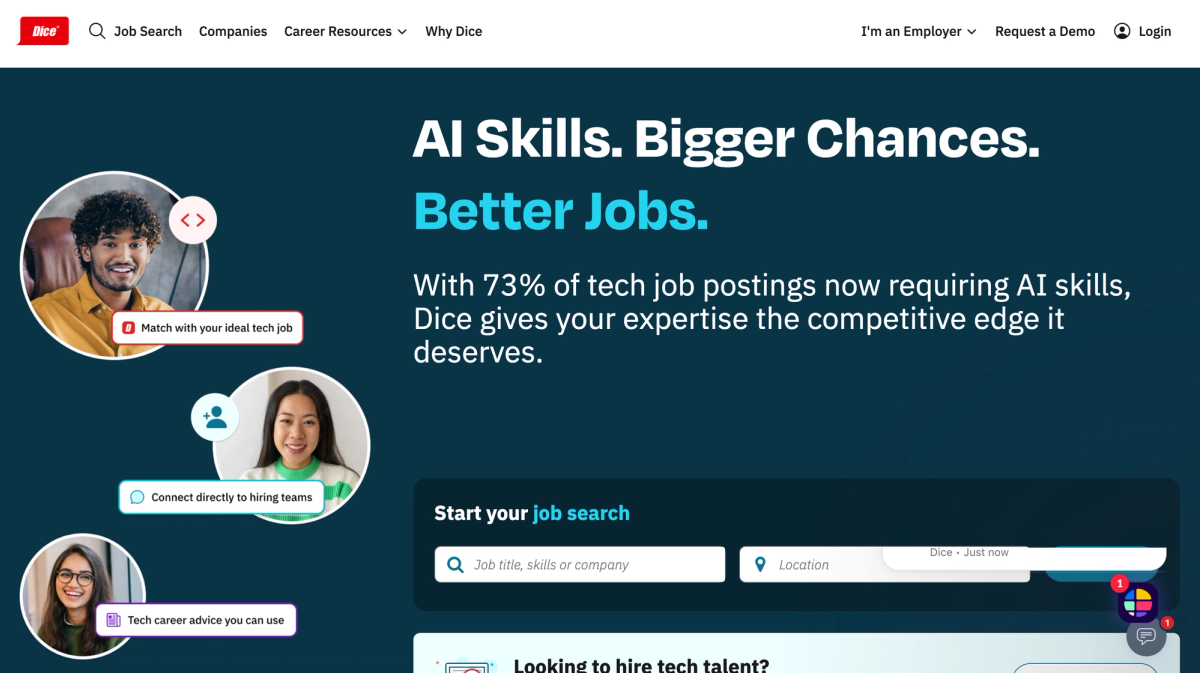
Who it's for: US tech and IT professionals, especially contractors and cleared workers.
Specializes in: Tech and IT roles with contract work and security clearance filters, and a heavy staffing agency presence.
Tip: Expect agency recruiters rather than direct employer replies, and keep your skills list current because that is what they search. Do not judge your whole search by response rates here; our data shows heavy bulk-apply behavior on tech boards like this one.
Boards we could not rank
This ranking only includes sites with at least 1,000 tracked applications, and some well-known names did not clear that bar. Remote-only boards like FlexJobs, We Work Remotely, and Remote OK fall below it, so we cannot rate them fairly; most remote roles in our data flow through the remote filters on the big boards instead. The same threshold excludes USAJOBS, the federal government's own hiring site. Do not confuse it with GovernmentJobs at the top of our ranking, which covers state, county, and city agencies. Federal roles live on USAJOBS and nowhere else. JobStreet, the Seek-owned leader in Malaysia, Singapore, and the Philippines, sits just under the bar at 968 tracked applications; it converted well above average in every cut we ran, including the Q2 table below, and should clear the threshold soon.
Freelance and gig platforms like Upwork and Fiverr sit outside the scope entirely; they run on proposals and contracts, not applications and interviews. As more job seekers track applications from these sources, future updates will rate them. And if you want the map beyond these 25, our list of 101 job search sites covers every category and region from the same dataset.
Where LinkedIn lands
LinkedIn captured 970,190 tracked applications, 78% of everything in our data. It converted 1.95% of them, one interview for every 51 applications. That is the LinkedIn trade: every job in one place, and everyone else standing in the same line.
If you only fish where everyone fishes, you compete with everyone. The good news for LinkedIn users: its rate is climbing fast, and the next section shows it. To see your own response rate by job site, Huntr's job search metrics calculate it from your tracked applications automatically.
What changed in Q2 2026
Most sites ran above their long-run rate in Q2 2026. Good news is rare in this market, so here is the quarter on its own, for every site with at least 200 tracked applications between April 1 and June 30.
| Rank | Job site | Q2 applications | Q2 interviews | Interview rate |
| 1 | Welcome to the Jungle | 286 | 34 | 11.89% |
| 2 | Google Jobs | 298 | 23 | 7.72% |
| 3 | Magneto | 355 | 17 | 4.79% |
| 4 | 37,020 | 1,482 | 4.00% | |
| 5 | Indeed | 4,151 | 162 | 3.90% |
| 6 | Computrabajo | 1,004 | 38 | 3.78% |
| 7 | ZipRecruiter | 548 | 20 | 3.65% |
| 8 | JobStreet | 200 | 7 | 3.50% |
| 9 | Jobright | 284 | 7 | 2.46% |
| 10 | Handshake | 408 | 9 | 2.21% |
| 11 | Elempleo | 1,537 | 33 | 2.15% |
| 12 | Glassdoor | 449 | 8 | 1.78% |
| 13 | Dice | 276 | 1 | 0.36% |
| 14 | CV-Library | 584 | 2 | 0.34% |
| 15 | Totaljobs | 532 | 1 | 0.19% |
| 16 | Hiring Cafe | 1,346 | 1 | 0.07% |
Welcome to the Jungle led the quarter at 11.89%. That is 34 interviews on 286 applications, so treat it as a strong signal, not a settled fact. Google Jobs held near its long-run rate. The big story is LinkedIn.
LinkedIn climbed from 1.75% in Q1 2025 to 4% in Q2 2026, and Indeed followed a similar path. The climb is likely understated, since recent applications have had less time to turn into interviews. The 2025 Annual Job Search Trends Report found the same ordering across 598,627 applications: niche and direct sources on top, mass boards trailing. The gap between the giants and the specialized boards is narrowing, but it has not closed.
Apply closer to the source
Group every application by where it actually went and a pattern shows up. Applications through job boards and aggregators reached an interview 1.95% of the time. Applications that went straight into an applicant tracking system such as Workday or iCIMS converted at 3.16%. Applications through a company's own career page converted at 6.87%.
Google Jobs works the same way, routing applicants to employer forms, which helps explain its 6.6% rate. At the other end sit the highest-volume, lowest-effort pipelines. Dice (0.13%), Hiring Cafe (0.18%), and SimplyHired (0.29%) carry heavy bulk-apply traffic in our data. That says more about how people use those sites than about the sites themselves, but the result for the average applicant is the same.
Job boards vs job search engines
The terms blur together, but the mechanics differ. A job board hosts postings that employers pay to list: Indeed, LinkedIn, ZipRecruiter, and the regional boards all work this way. A job search engine crawls the web and indexes postings wherever they live; Google Jobs is the biggest, and it sends you to the employer's own form instead of hosting the application itself. An aggregator sits in between, republishing listings collected from boards and career pages, the way SimplyHired, Jobright, and Hiring Cafe do.
The distinction matters because of where each one sends you. The best job search engines route you to the source, and applications at the source converted at 6.87% in our data. Boards and aggregators keep the application inside their own pipeline, where the average is 1.95%. That mechanic, more than any brand, explains most of the ranking above.
How to use this in your own search
Keep LinkedIn, but stop treating it as the whole search. Add two or three sources from the top of this list that fit your life: Google Jobs for everyone, Handshake if you are a student, Wellfound for startups, GovernmentJobs for public sector work, and the regional leader wherever you live.
"The most common story I hear on my daily calls with job seekers has not changed: someone sends three hundred Easy Apply applications, gets two callbacks, and concludes something is wrong with them. Nothing is wrong with them. The channel is the problem. When they cut the volume, pick better boards, and tailor each resume, the interviews start." – Sam Wright, Head of Career Strategy, Huntr
Then fix the input. In the Q1 2026 report, applications sent with a tailored resume converted at 4.23%, versus 2.07% with an untailored one, a 2x lift. The pattern holds in the full dataset today: applications with a resume tailored to the posting converted at 5.7%, versus 3.1% without, nearly double. Build your base resume once in the AI resume builder, then tailor it to each posting. Ten to twenty tailored applications a week across several boards beats fifty one-click applications on one.
And when a listing gives you the choice, apply on the company's own site. The data is blunt on this point: the closer to the source, the better your odds.
Methodology
This analysis covers 1,244,654 applications tracked by Huntr users between October 1, 2024 and July 1, 2026, across 25 job sites and job boards with at least 1,000 tracked applications each.
Q2 2026 figures cover applications logged between April 1 and June 30, 2026 on sites with at least 200 applications in the quarter. An application counts as converting when the user logged at least one interview for that job. Rates reflect the behavior of Huntr users, not a controlled experiment; boards differ in the roles, regions, and applicant habits they attract. Recent quarters slightly understate true conversion because recent applications have had less time to turn into interviews. Glassdoor's country domains are counted separately.
A note on how this squares with our earlier reports: the quarterly and annual Job Search Trends reports measure responsiveness as a saved job moving to the interview stage or beyond, each over its own window. The Q1 2026 report's trailing-twelve-month cut put Google at 7.12% and LinkedIn at 2.94%. The 2025 Annual Report put Google Jobs at 11.3% and LinkedIn at 3.1%.
This article counts logged interviews only, over the full dataset, so the rates here run lower. The ranking holds in every cut: specialized and direct sources on top, the mass boards behind them.
A note for reporters and career coaches
Reporters: the data behind this report is available on request, including per-site cuts by quarter, role, and region, under embargo or otherwise. Write to [email protected]. Coaches, career writers, and educators are welcome to cite this report with a link back. If you want a specific chart or a custom cut for your audience, ask and we will run it.
For the wider picture on time to offer, application volume, and hiring trends, read the Q1 2026 Job Search Trends Report. The Q2 2026 report is on its way.
Frequently asked questions
What are the best job boards in 2026?
Measured by interview rate per application across 1.24 million tracked applications: GovernmentJobs (7.28%), Google Jobs (6.6%), Seek (5.16%), Magneto (4.09%), and Welcome to the Jungle (3.78%) lead our data.
What is the best job search engine?
Google Jobs. It aggregates postings from employer career pages and other boards, and applications sourced through it converted at 6.6%, more than triple LinkedIn's rate.
Is LinkedIn still worth using?
Yes. It lists more jobs than every other site combined, and its interview rate has doubled since early 2025. Pair it with two or three higher-converting boards, and tailor each resume you send.
Are niche job boards better than big ones?
In our data, yes. Specialized and regional boards, whether for startups, students, public sector roles, or a single country, convert better than the global giants almost across the board. Smaller candidate pools mean each application gets seen.
Is Indeed or LinkedIn better for getting a job?
Indeed converted at 2.92% across all our data versus LinkedIn's 1.95%, and both improved in Q2 2026 (3.9% and 4% respectively). Use both to find roles, then apply on the employer's site with a tailored resume.
Which job board has the highest success rate?
GovernmentJobs, at 7.28%, one interview for every 14 applications, among sites with at least 1,000 tracked applications. For most people the practical answer is Google Jobs at 6.6%, since it covers every role and region.
What is the best job site for remote work?
Remote-only boards did not clear the 1,000-application bar in our data, so we cannot rank them. The remote filters on Google Jobs, LinkedIn, and Indeed carry most remote listings, and Wellfound and Welcome to the Jungle mark remote-friendly employers clearly.
Are job boards worth it in 2026?
Yes, as a discovery layer. Applications made through boards converted at 1.95%, through applicant tracking systems at 3.16%, and through company career pages at 6.87%. Find the job on a board, then apply at the source with a tailored resume.
This data comes from job seekers who track every application in Huntr: where it came from, and what happened next. It is free to use, and the more people track, the sharper this picture gets.
Get More Interviews, Faster
Huntr streamlines your job search. Instantly craft tailored resumes and cover letters, fill out application forms with a single click, effortlessly keep your job hunt organized, and much more...
AI Resume Builder
Beautiful, perfectly job-tailored resumes designed to make you stand out, built 10x faster with the power of AI.
Next-Generation Job Tailored Resumes
Huntr provides the most advanced job <> resume matching system in the world. Helping you match not only keywords, but responsibilities and qualifications from a job, into your resume.
Job Keyword Extractor + Resume AI Integration
Huntr extracts keywords from job descriptions and helps you integrate them into your resume using the power of AI.
Application Autofill
Save hours of mindless form filling. Use our chrome extension to fill application forms with a single click.
Job Tracker
Move beyond basic, bare-bones job trackers. Elevate your search with Huntr's all-in-one, feature-rich management platform.
AI Cover Letters
Perfectly tailored cover letters, in seconds! Our cover letter generator blends your unique background with the job's specific requirements, resulting in unique, standout cover letters.
Resume Checker
Huntr checks your resume for spelling, length, impactful use of metrics, repetition and more, ensuring your resume gets noticed by employers.
Gorgeous Resume Templates
Stand out with one of 7 designer-grade templates. Whether you're a creative spirit or a corporate professional, our range of templates caters to every career aspiration.
Personal Job Search CRM
The ultimate companion for managing your professional job-search contacts and organizing your job search outreach.
Huntr
Blog Product Updates Resume Skill Guides Resume Examples Interview Question Guides Research 2025 Job Search Trends Report Affiliate Program Careers Privacy policy Terms of service Write for us LinkedIn Reddit r/HuntrCo Twitter @TryHuntr Email UsProduct
Job Tracker AI Resume Builder Resume Tailor Resume Checker AI Cover Letters Resume Summary Generator Resume Bullet Generator Resume Skills Generator Resume Headline Generator Resume Keyword Scanner Job Keyword Finder Targeted Resume Contact Tracker Interview Tracker Job Search Metrics Job Application Autofill Resume Storage AI Resume Review Job Clipper Resume Optimization ChatGPT Resume Builder Resume Fixer LinkedIn Resume Builder AI Resume Rewriter Interview Question Generator