

People have been killing the resume for 40 years.
In the 1980s, career critics called it "hopelessly outdated." The fax machine and word processing were supposed to change everything. In 2012, a book called The Resume is Dead hit #1 on Amazon. Forbes declared "The Death of the Resume," saying social media would make it obsolete. In 2016, TechCrunch said LinkedIn should kill the resume and replace it with an "experience graph."
LinkedIn did not kill the resume. LinkedIn became one.
Now it's 2026, and the headlines are back. Bloomberg says AI is "hastening the resume's demise." Business Insider says "slop is killing the resume." Marketplace says the resume "might be a thing of the past."
And yet every person who has ever said the resume is dead has gone on to fill out an application and submit a resume.
The short answer: No, the resume is not dead. The data shows it still plays a central role in getting hired. But most people use it wrong, and the myths around it do real harm. In fact, AI-tailored resumes that match the job description see a 60% increase in interviews. This means the resume is not dead; bad resumes are.
Here's what our data from 1.7 million job applications and 225,000+ resumes actually shows.
Why People Keep Saying the Resume Is Dead
People love to skip past the present and race to declare what comes next. Society rewards those who make the first prediction. The algorithm rewards people with what they want: fantasy.
But hiring does not work that way. Hiring is humans choosing other humans. And humans like something they can scan in six seconds that tells them: does this person have what I need?
It will be a strange day when business owners worldwide trust AI to fully handle hiring, including sending the offer. Even if you automate everything about hiring, from screening to reviewing who gets an offer, what would you review? A resume.
That is what a resume does. It is a short, clear summary of skills and results, built for the job in front of you.
What the Data Says About Resumes in 2026
At Huntr, we have analyzed over 1.7 million job applications and 225,000+ resumes. We have also surveyed 1,000+ job seekers, and I have personally spoken with more than 500 job seekers one-on-one. Here is what we know.
Tailored Resumes Get Nearly 1.6x More Interviews
Tailored resumes see about a 60% increase in interview callbacks over generic ones. That works out to roughly a 6% conversion rate (1 in 17 applications) for tailored resumes.
Why? Because a tailored resume puts the right skills, the right keywords, and the right context in front of a human reader in the few seconds they spend scanning it. Whether an AI tool or a recruiter reads it first, the result is the same: a clear fit gets a callback. Vague fit gets skipped.
Two-Page Resumes Perform as Well or Better Than One-Page
One of the most stubborn resume myths is that your resume must fit on one page. Our data on 225,000+ resumes shows two-page resumes perform as well or better than one-page resumes across all experience levels.
If you have the experience to fill two pages with strong, relevant results, use two pages.
90% of Resumes Still Miss the Basics
I have personally reviewed 648 resumes this past year. About 90% of them do not follow basic, data-backed best practices. They bury their strongest results. They skip context about their employers. They treat the skills section as an afterthought. They do not read the role and responsibilities section of the job posting. They cram everything onto one page in 9-point font.
AI did not fix this. AI gave people a faster way to make the same mistakes.
"But AI Makes Every Resume Perfect Now"
This is the claim I hear most. And it is wrong.
Every recruiter I have spoken with this year says the same thing. Kristen Fife, a senior technical recruiter at Amazon who recruits for their AGI division, told me flat out: "A person reads every single resume. There is no AI involved at all, period. End of sentence." She reviews resumes for the team building large language models, and she does it without AI.
Ted Staeb, a recruiter at Microsoft who handles 30 to 50 open roles at once, put it this way: 60% of job seekers in our survey believe they are being auto-rejected by AI. Ted's response? "They'd be wrong." What candidates mistake for AI rejection is usually a knockout question they answered wrong, or basic economics: more people on the market than there are jobs open.
The recruiters are not worried about perfect AI resumes. They worry about the same things they have always worried about: candidates who do not show scope, provide context, or explain what problem they solved and how they solved it. Or worse, candidates who lie.
The Lawsuit That Should Make You Pay Attention
Here is something the "resume is dead" crowd does not talk about: the legal risk of replacing human judgment with AI in hiring.
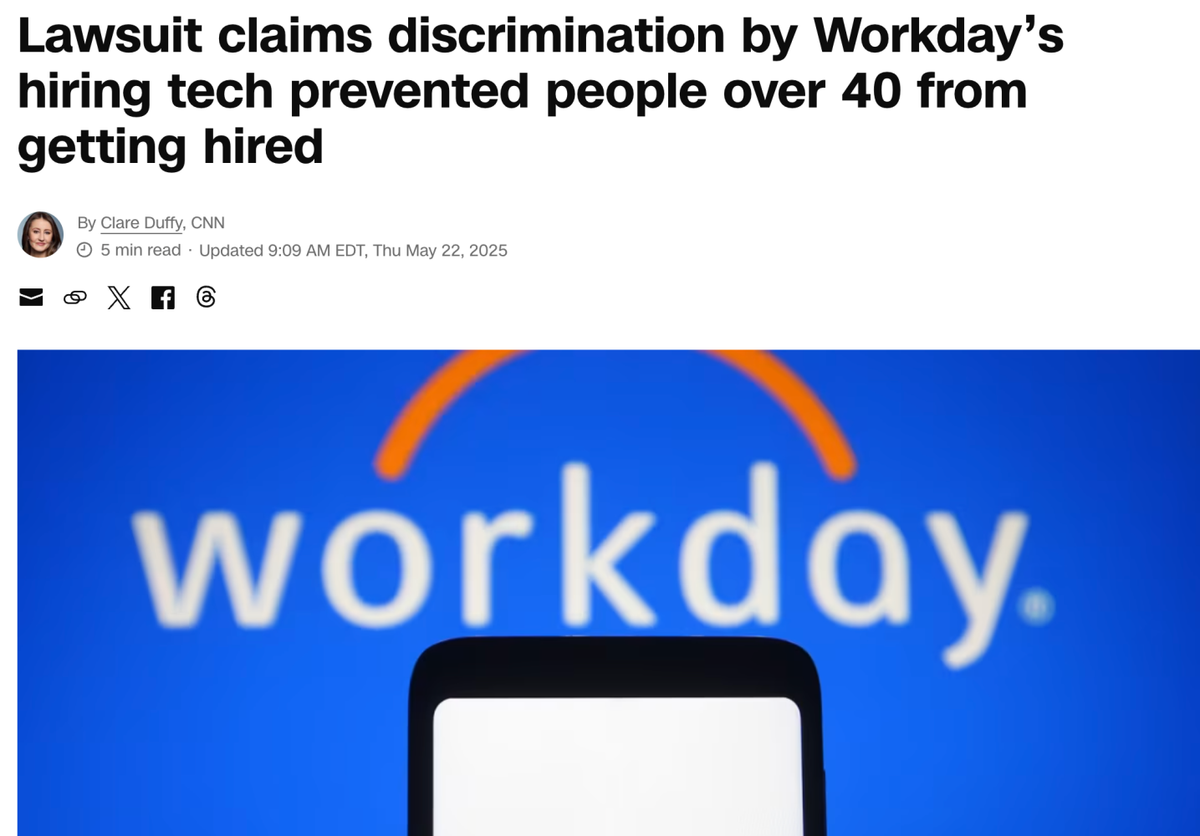
Derek Mobley filed a class action lawsuit against Workday in 2023, alleging that its AI-powered screening tools discriminate based on race, age, and disability. In May 2025, a federal court granted conditional certification for the case to proceed as a nationwide collective action. That means millions of job applicants aged 40 and over who were screened through Workday's AI tools since 2020 can now join the suit.
This is not a fringe case. This is a major HR technology company facing a class action over its core product.
Smart companies are being careful. As Kristen told me, the legal exposure alone keeps most large employers from letting AI make screening decisions. The AI might parse your resume into a database. But a human decides whether to call you.
As long as companies face real legal consequences for trusting algorithms over people, the resume stays. Because the resume is what humans read.
5 Resume Myths That Need to Die
The resume is fine. What needs to die is the nonsense around it.
Myth 1: ATS Systems Auto-Reject You Because of Formatting
They do not. A recruiter told me, "It basically takes a picture of your resume and attaches it to your profile. That's all it does."
Myth 2: Your Resume Must Be One Page
Our data on 225,000+ resumes shows two-page resumes perform as well or better across all experience levels. Use the space you need to tell your story.
Myth 3: You Need to Trick the Algorithm
There is no algorithm to trick. Generally speaking, there is a recruiter with 200 applicants and six seconds per scan. Write for that person.
Myth 4: AI Has Made Everyone's Resume Perfect
It has not. 90% of the resumes I review still miss the basics. AI just helped people make the same mistakes faster.
Myth 5: The Resume Is Dying
The people writing those headlines will write them again in five years when the next tool comes along. The resume will still be there.
What Job Seekers Should Do Instead
Here is what the data says works.
- Tailor your resume to match the job description. Read the full posting, especially the role and responsibilities section, not just the requirements. Our data shows this alone can nearly double your interview rate. A tool like Huntr can help.
- Lead with your strongest results. Recruiters scan for scope. If you managed a $50 million pipeline, it should be easy to find in six seconds.
- Give context. If you work for a 12-person startup, say what they do and how you affected the company. Think about the size, scope, and scale of your work.
- Use a skills section that matches the job. This helps with both human scanning and keyword sourcing when recruiters search their databases.
- Apply to 10 to 20 jobs per week on platforms beyond LinkedIn. Our data shows that Google Jobs, Glassdoor, Wellfound, Indeed, and Welcome to the Jungle all outperform LinkedIn in application-to-interview conversion.
- Use AI to help, not to replace your judgment. Use it to speed up tailoring, to catch blind spots, to tighten your language. The best results come when a human starts the process and a human finishes it.
The Resume Lives
The resume has survived the fax machine, the internet, social media, LinkedIn, video, and now AI.
Not because it is perfect. Because it is useful. A short document that tells a busy person whether you might be the right fit for their team.
It can and will get better at sharing your story as it relates to the job you are applying to. But it is not going anywhere.
So stop worrying about whether the resume is dead. Start making yours worth reading.

Sam Wright
Sam Wright is the Head of Career Strategy at Huntr. Drawing on proprietary data from 1.7 million applications, 1 million job postings, 243,000 résumés, and a 1,049-respondent survey, Sam provides actionable, data-driven blueprints to help professionals navigate today's fractured hiring landscape. He has conducted over 900+ free support calls with job seekers, giving him frontline insight into today's job market. His work and insights have been featured in Business Insider, The Wall Street Journal, Forbes, and The Seattle Times.
Outside the tech world, Sam is a part-time farmer from a five-generation legacy of organic vegetable farming. He is a passionate advocate for farmland preservation.
Get More Interviews, Faster
Huntr streamlines your job search. Instantly craft tailored resumes and cover letters, fill out application forms with a single click, effortlessly keep your job hunt organized, and much more...
AI Resume Builder
Beautiful, perfectly job-tailored resumes designed to make you stand out, built 10x faster with the power of AI.
Next-Generation Job Tailored Resumes
Huntr provides the most advanced job <> resume matching system in the world. Helping you match not only keywords, but responsibilities and qualifications from a job, into your resume.
Job Keyword Extractor + Resume AI Integration
Huntr extracts keywords from job descriptions and helps you integrate them into your resume using the power of AI.
Application Autofill
Save hours of mindless form filling. Use our chrome extension to fill application forms with a single click.
Job Tracker
Move beyond basic, bare-bones job trackers. Elevate your search with Huntr's all-in-one, feature-rich management platform.
AI Cover Letters
Perfectly tailored cover letters, in seconds! Our cover letter generator blends your unique background with the job's specific requirements, resulting in unique, standout cover letters.
Resume Checker
Huntr checks your resume for spelling, length, impactful use of metrics, repetition and more, ensuring your resume gets noticed by employers.
Gorgeous Resume Templates
Stand out with one of 7 designer-grade templates. Whether you're a creative spirit or a corporate professional, our range of templates caters to every career aspiration.
Personal Job Search CRM
The ultimate companion for managing your professional job-search contacts and organizing your job search outreach.
Huntr
Blog Product Updates Resume Skill Guides Resume Examples Interview Question Guides Research 2025 Job Search Trends Report Affiliate Program Careers Privacy policy Terms of service Write for us LinkedIn Reddit r/HuntrCo Twitter @TryHuntr Email UsProduct
Job Tracker AI Resume Builder Resume Tailor Resume Checker AI Cover Letters Resume Summary Generator Resume Bullet Generator Resume Skills Generator Resume Headline Generator Resume Keyword Scanner Job Keyword Finder Targeted Resume Contact Tracker Interview Tracker Job Search Metrics Job Application Autofill Resume Storage AI Resume Review Job Clipper Resume Optimization ChatGPT Resume Builder Resume Fixer LinkedIn Resume Builder AI Resume Rewriter Interview Question Generator