
Huntr Blog
What Do Recruiters Actually Do With Your Resume in 2026? I Asked 3 Hiring Managers.
April 02, 2026

Important
60% of job seekers think they're being auto-rejected by AI... A Microsoft recruiter told me: they're wrong. Here's what's actually happening to your resume, from 3 recruiters & hiring managers who process thousands of applications.
I've taken over 600 free job-search calls this past year. One question comes up more than any other:
"What is actually happening to my resume on the other side?"
So I went and asked.
I personally interviewed three active recruiters: Ted Staeb at Microsoft, managing 30-50 open roles at once; Cameron Black at a Fortune 500 company; and Scott Lipinski, who spent years at a Big Four accounting firm before moving to IT. Together, they've seen tens of thousands of applications. All three agreed to share what they know.
Here's what they told me. And why I'm more convinced than ever that tailoring your resume to match the job description is key to standing out.
AI is not rejecting you, yet
I survey job seekers at Huntr. About 60% think they're being auto-rejected by AI.
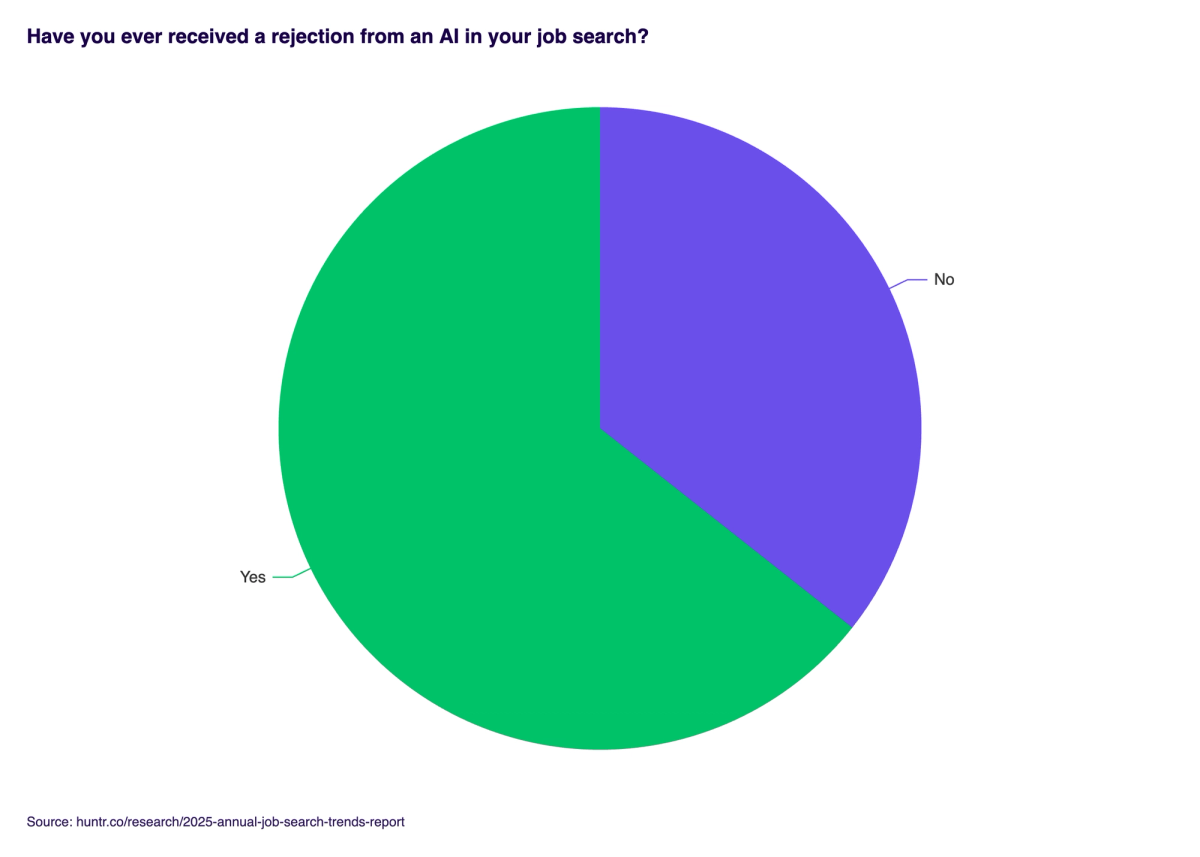
Ted Staeb, the Microsoft recruiter, responded: "They'd be wrong."
When you get rejected in five minutes, or at 1:38 am on a Tuesday, you assume a machine read your resume and threw it out. But there's no message that says "rejected by AI." No system sends that. What's happening is simpler and more frustrating: a pre-qualification question knocked you out before a human saw your name.
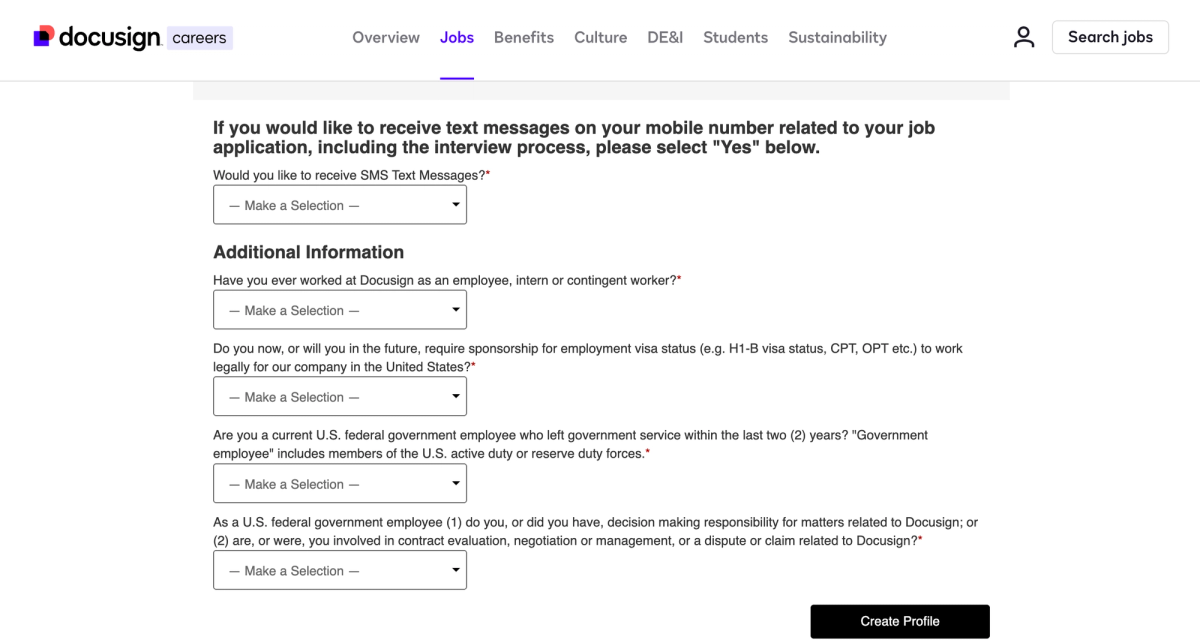
Pre-qual questions are filters built into most applications. Do you have a bachelor's degree? Can you work in this country? Do you have five or more years of experience with this tool? Answer wrong, and you're out. Not because of AI. Because of a yes/no question you didn't read.
The Fortune 500 recruiter told me she's seen people accidentally click that they're not authorized to work in the United States.
"There are people who don't pay attention to the questions. They don't read what they're answering. That is a big, big deal."
Recruiters never see those candidates. Only the people who passed come through.
That rejection at 1:38 am more often than not was a knockout pre-qualification question, not AI.
The ATS is a filing cabinet. Not a judge.
Job seekers tell me every week they're sure the ATS is scanning for keyword density, rejecting two-column layouts, and blocking PDFs. Some of this comes from career coaches or resume writers. Most of it is wrong.
"An ATS is just a filing cabinet. It doesn't make decisions."
That's Ted, the Microsoft recruiter, who built an ATS in Trello, demoed systems for companies, and used Workday, Taleo, and Greenhouse across multiple roles.
The keyword filters people obsess over?
"Boolean search with a better paint job."
Thirty-year-old technology. The things people call AI have been around since before most job seekers started their careers.
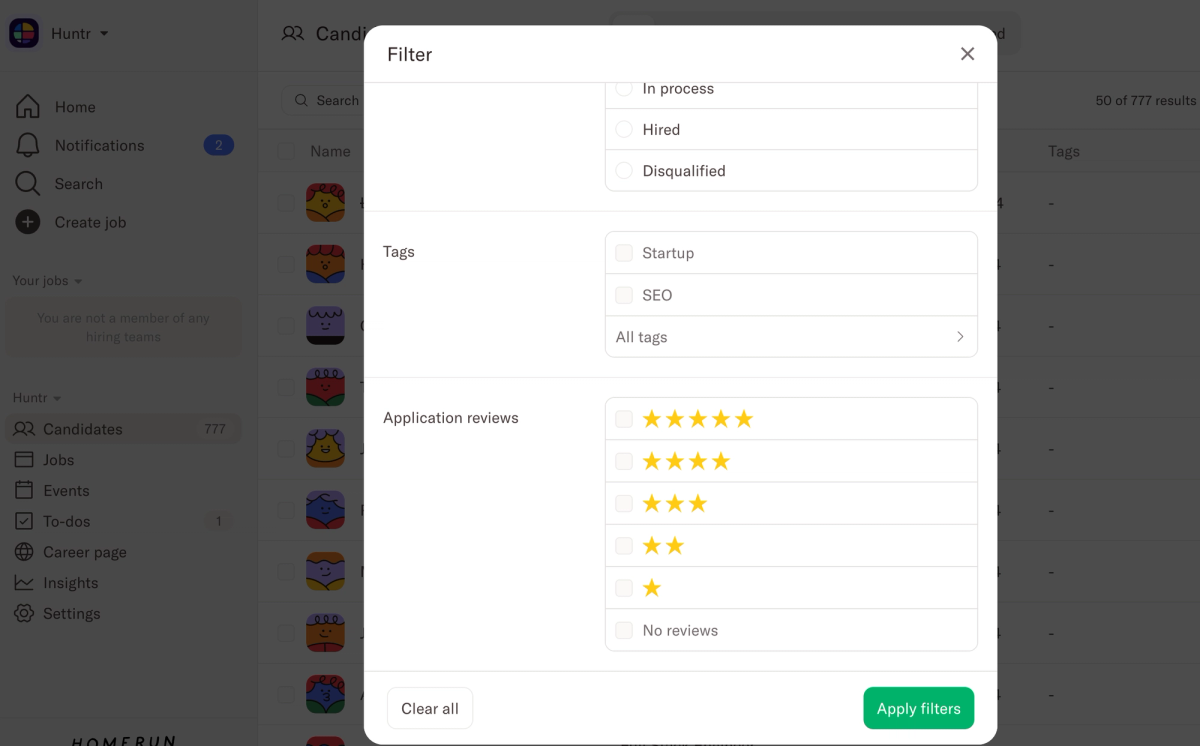
For example, we use Homerun as our ATS at Huntr. It has a starring system for candidates, and you can search by date, source, status, and tags. Straightforward, with no automatic filters, screens candidates out.
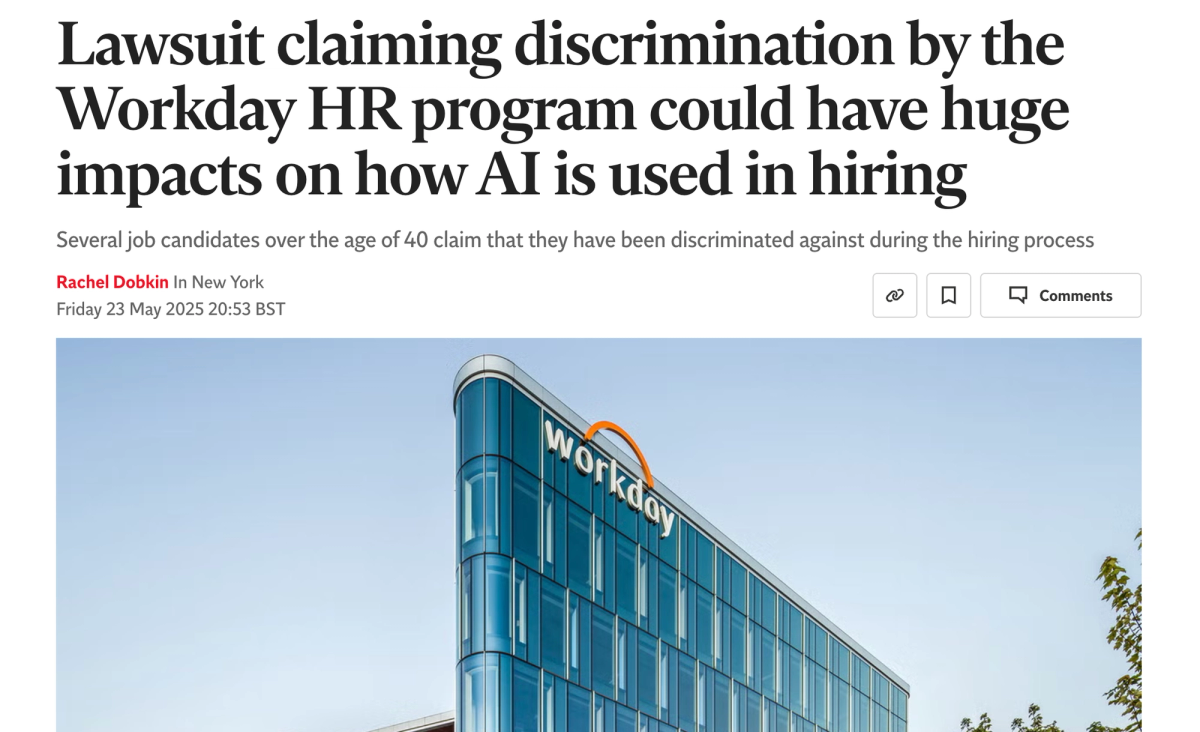
Real AI in recruiting is still in its early stages. The lawsuits against Workday, alleging auto-grouping and rejection, are proof that we're at the start of AI in recruiting. Right now, the most the ATS does is parse your resume into fields. Even that varies by tool. Workday, however, is notorious as one of the worst parsers.
The Fortune 500 recruiter I spoke with was blunter: "I don't parse anything. I just read the resume. I don't know why people fill out those forms. Recruiters don't look at the forms. We look at your resume."
Of course, some forms are mandatory, but you get the point.
This is how a recruiter reads your resume.
I asked each recruiter what they do when a resume lands in their queue.
The Fortune 500 recruiter:
"I look at the top first. If the first few things interest me, I scroll to the bottom. Then I scroll up. I'm looking at companies, title, and tenure."
The Big Four recruiter said to think of your resume as a record of what you did:
"I solved this problem using these tools, and here's how well it went. Give me numbers, percentages, dollar signs. Not letters. And don't write paragraphs. The more paragraph-heavy a resume is, the less likely we are to read it. We've got 738 others that gave us the data straight."
One line stayed with me:
"Don't write the word 'four.' Give me the number 4. I'm not going to see F-O-U-R."
Recruiters scan fast. Numbers stand out.
What they look for: progression, company names, titles, tenure, results.
Apply early. This is not optional.
The Microsoft recruiter runs 30 to 50 open roles at once. When I asked about conversion rates, he reframed it.
"We don't look at conversion rates. I tell every hiring manager: get five people interviewing. If you have five, you'll get a hire."
Five. Once five good candidates are in the pipeline, they stop looking.
"You can be the best candidate. But if you apply three weeks later and we already have five people in the loop, we'll never see you. We're not looking anymore."
At the time of our call, he had six roles open for less than a week. Each had over 500 applicants.
Six roles. Under one week. Five hundred applicants each. Once five qualified people were in, everyone else was invisible.
Apply early.
The things that get you flagged.
All three recruiters named the same red flags. None are about keywords or layout. All are about honesty and care.
Extending your end date past when you left.
"He hadn't worked for a year and a half but still had 'present' on his resume. I knew it wasn't a typo. When I called and found out, that was a red flag. Is that honest?"
The Big Four recruiter said he'd rather see a real gap than a date that doesn't hold up.
Applying to too many roles at one company. The Fortune 500 recruiter sees every role a candidate has applied to in her system.
"If they've applied to 15 roles and they're all over the place, I start to wonder why."
Not disclosing visa needs.
"One of the most frustrating things is finding a great candidate, getting excited, then learning mid-process they need sponsorship we can't offer. Just put it on your resume. Why waste everyone's time?"
Leaving ChatGPT prompts in the document. The Fortune 500 recruiter had seen resumes come in with the prompt still at the bottom, something like "Do you want me to revise this?" "I passed on that person. Your attention to detail right there was very bad."
Ghosting goes both ways.
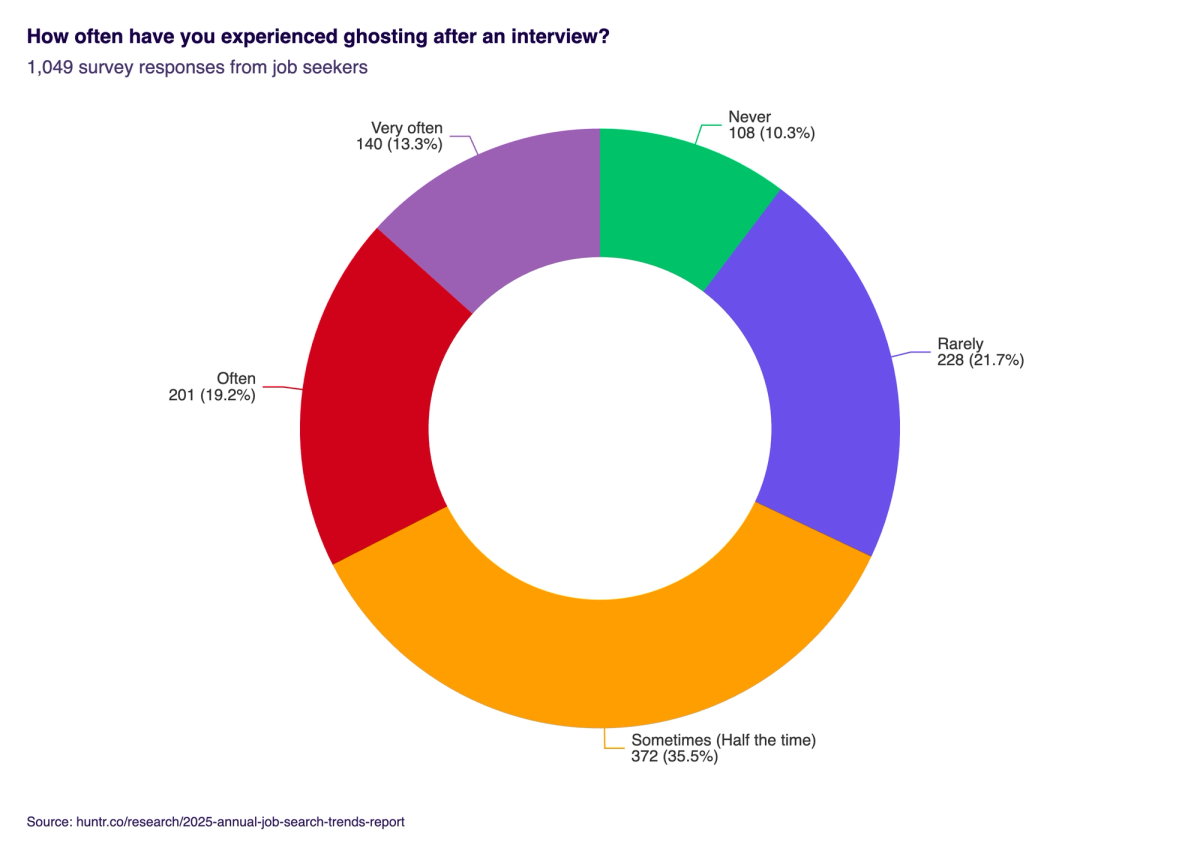
Job seekers feel ghosted. Nearly 90% of job seekers report experiencing this frustrating phenomenon at least occasionally, with over a third saying it happens about half the time they interview.
Recruiters do too.
"I get ghosted by candidates every week," the Microsoft recruiter said. "That doesn't make it right. But it's something both sides live with."
Being ignored is not the same as being ghosted. If you applied and never heard back, you were ignored. If you went through interviews, built a back-and-forth, and then they disappeared, that's ghosting.
"Being ghosted and being rejected are the same thing. You're being told no. The only question is whether you're angry about how."
The volume makes replies nearly impossible. He has six roles, each with 500+ applicants. Each candidate in the pipeline takes five to six hours a week to track, follow up on, and manage. Many recruiters now work on 40-hour contracts. When those hours are up, they stop. No overtime.
That's not an excuse. It's what job seekers are dealing with.
The one thing all three agreed on.
There is no master resume.
The Big Four recruiter put it plainly:
"Think of yourself as a key. You either fit this lock, or you don't. There's no resume that opens every job. If your experience is real and you're honest about who you are, you'll open the right doors."
Every post promising one trick to beat the ATS, every coach selling a proven formula, every thread on keyword density, they're all selling a master key. It doesn't exist.
What exists is a real person on the other side. Someone with preferences not listed in the job post. Someone who might want to see that you played a sport in college. Someone managing 30 to 50 roles with six seconds to decide if you're moving forward.
Be the right fit. Not a formula. Tailor your resume to match the job description.
What to Do: A Data-Backed Checklist Job Search Checklist
From three recruiters and analysis of 1.7 million job applications in our system, here's what works:
- Read the pre-qualification questions. And be honest about filling them out. These are what filter you out, not AI.
- Tailor your resume to match the job description. This helps you stand out by showcasing the most relevant parts of your career that make you a fit.
- Apply early. Once five good candidates are in the pipeline, they stop looking. Early gets seen. Late often doesn't.
- Use numbers. Not paragraphs. Not "results-driven professional." Dollar signs, percentages, headcounts. The number 4, not the word "four."
- Show progression. Recruiters look for companies, titles, and tenure. Make it easy to follow.
- Fill out the education section. Clubs, sports, honors, dean's list. It gives recruiters something real to connect with.
- Be honest about gaps and visa status. Hiding either wastes time and breaks trust when it comes out.
- Don't auto-apply to 15 roles at one company. They can see it.
- Skip the cover letter unless you're relocating or going for a small company where the founder reads everything. If you are really passionate about the role, consider it, but only if you put in the effort and make it good.
- Don't lie on pre-qual questions. You'll pass the filter and fail the interview.
Be the right fit, not the noise.
Frequently Asked Questions
Does ATS automatically reject resumes?
No, not the way most job seekers think. ATS systems are filing tools, not decision-makers. What filters people out automatically are pre-qualification knockout questions in the application: work authorization, minimum years of experience, and required certifications. Answer one wrong, and you're out before a human or AI sees your resume. A rejection five minutes after applying is almost always a knockout question, not AI screening.
What do recruiters look for first on a resume?
Company names, job titles, and career progression, not the summary. One recruiter scrolls straight to the bottom to check education, then works back up to see the arc of someone's career. Another looks for numbers and results at the top. What they skip: summaries, cover letters, and application forms.
What are the red flags on a resume that get you rejected?
The most common: extending your end date past when you left; applying to 15 or more roles at the same company; not disclosing visa needs upfront; submitting AI-written text without editing it, including leaving ChatGPT prompts in the document; and writing dense paragraphs instead of short, metric-driven bullets. None of these are ATS issues. They're human calls made in the first few seconds.
What are the 3 C's of a resume?
Clarity, Conciseness, and Credibility. Clarity means the recruiter can see your role, your growth, and your results without having to work for them. Conciseness means cutting everything that doesn't help your case: long summaries, vague context, old jobs with no bearing on the role. Credibility means every claim ties to a number, a company, or a result. "Results-driven professional" proves nothing. "Grew pipeline by $2.4M in 18 months at Salesforce" proves all three.
How many applications does a recruiter review per role?
It varies. A Microsoft recruiter with 30-50 open roles at once said six of his roles had over 500 applicants in under a week. A Fortune 500 recruiter said some in-office roles get as few as five. The number that matters: most recruiters stop looking once they have five qualified candidates in the interview pipeline. Timing is more important than most people think.
Why do recruiters ghost candidates after interviews?
Volume makes individual replies hard. Legal risk stops specific feedback. Being ignored is also different than ghosting. It means you applied and never heard back; ghosted means you got through interviews and then silence. Both end the same way, but the breach of expectation is greater once you've had real conversations.
Should I use a one-page or two-page resume?
Two pages are better for basically everyone, and the data backs it up. The one-page rule is old advice that doesn't match how recruiters actually work. What matters is whether each page earns attention. Two pages of dense paragraphs are worse than one page of clean, numbered bullets. If the second page contains real work, use it.
Do recruiters read cover letters?
Rarely. Most don't open them unless you're relocating. At large companies, they require an extra click that most recruiters won't take. The exception is small startups where the founder reads everything. In that case, a short, specific letter that shows you know the company and want this role can help. For large companies, use that time to message the recruiter on LinkedIn instead.
How do pre-qualification questions work in ATS?
They sit in the application before your resume is ever seen. They ask about work authorization, years of experience, certifications, or location. Your answer qualifies or disqualifies you on the spot. Recruiters see only those who passed. Everyone else is gone, automatically and without notice. Lying to pass a knockout question will surface in the interview. Every recruiter in this article said they watch for it.
What does a recruiter look for in a resume summary?
The version that works: 2 to 4 sentences stating your role, your biggest result, and what you want next. The version that doesn't: "Results-driven professional with 10+ years of experience." That could be anyone.
Does applying early really make a difference?
Yes, and more than most people expect. Once a recruiter has five good candidates in the pipeline, most stop reviewing new ones. Roles at large tech companies can hit 500+ applicants in under a week. People who apply on the first day or two are reviewed as the pipeline is forming. People who apply two weeks later are often never seen, no matter how qualified they are. Applying early may be the most controllable thing in your search.
If you're a recruiter with something to share, I'd love to talk. Every conversation makes my advice to job seekers better.

Sam Wright
Sam Wright is the Head of Career Strategy at Huntr. Drawing on proprietary data from 1.7 million applications, 1 million job postings, 243,000 résumés, and a 1,049-respondent survey, Sam provides actionable, data-driven blueprints to help professionals navigate today's fractured hiring landscape. He has conducted over 900+ free support calls with job seekers, giving him frontline insight into today's job market. His work and insights have been featured in Business Insider, The Wall Street Journal, Forbes, and The Seattle Times.
Outside the tech world, Sam is a part-time farmer from a five-generation legacy of organic vegetable farming. He is a passionate advocate for farmland preservation.
Get More Interviews, Faster
Huntr streamlines your job search. Instantly craft tailored resumes and cover letters, fill out application forms with a single click, effortlessly keep your job hunt organized, and much more...
AI Resume Builder
Beautiful, perfectly job-tailored resumes designed to make you stand out, built 10x faster with the power of AI.
Next-Generation Job Tailored Resumes
Huntr provides the most advanced job <> resume matching system in the world. Helping you match not only keywords, but responsibilities and qualifications from a job, into your resume.
Job Keyword Extractor + Resume AI Integration
Huntr extracts keywords from job descriptions and helps you integrate them into your resume using the power of AI.
Application Autofill
Save hours of mindless form filling. Use our chrome extension to fill application forms with a single click.
Job Tracker
Move beyond basic, bare-bones job trackers. Elevate your search with Huntr's all-in-one, feature-rich management platform.
AI Cover Letters
Perfectly tailored cover letters, in seconds! Our cover letter generator blends your unique background with the job's specific requirements, resulting in unique, standout cover letters.
Resume Checker
Huntr checks your resume for spelling, length, impactful use of metrics, repetition and more, ensuring your resume gets noticed by employers.
Gorgeous Resume Templates
Stand out with one of 7 designer-grade templates. Whether you're a creative spirit or a corporate professional, our range of templates caters to every career aspiration.
Personal Job Search CRM
The ultimate companion for managing your professional job-search contacts and organizing your job search outreach.
Huntr
Blog Product Updates Resume Skill Guides Resume Examples Interview Question Guides Research 2025 Job Search Trends Report Affiliate Program Careers Privacy policy Terms of service Write for us LinkedIn Reddit r/HuntrCo Twitter @TryHuntr Email UsProduct
Job Tracker AI Resume Builder Resume Tailor Resume Checker AI Cover Letters Resume Summary Generator Resume Bullet Generator Resume Skills Generator Resume Headline Generator Resume Keyword Scanner Job Keyword Finder Targeted Resume Contact Tracker Interview Tracker Job Search Metrics Job Application Autofill Resume Storage AI Resume Review Job Clipper Resume Optimization ChatGPT Resume Builder Resume Fixer LinkedIn Resume Builder AI Resume Rewriter Interview Question Generator