
Huntr Blog
How to Use AI for Your Resume: What 1.7M Applications Say Works in 2026
April 02, 2026

Many are using AI improperly in their job search. I've personally reviewed 600+ resumes this past year, analyzed 1.7 million applications at Huntr, and met with dozens of recruiters to determine what makes a successful resume in 2026. What we have found is 90% are not following data-backed best practices for building a resume in today's job market. Many of the people behind those resumes I've reviewed told me they were using ChatGPT to help. Dozens of them applied to hundreds of jobs without hearing back- Using prompts that were getting them nowhere.
This is the definition of insanity: Doing the same thing over and over and expecting different results. If you've applied to more than 20 jobs and haven't heard back, stop. Read this.
AI can help your job search, especially when it comes to building your resume and tailoring it to match a job description. But most people are using it wrong. This guide covers what works and what will get your resume thrown out.
Better Resume. Faster job search.
Use Huntr's AI Resume Tailor to help land your next interview in 17 applications or less.
What Is an LLM and Why Does It Matter for Your Resume?
ChatGPT, Claude, Gemini, Grok: These are all Large Language Models and are sophisticated tools for predicting the next word in a sentence. That's it. They take text input, look at the data they were trained on, and guess which word comes next.
Yann LeCun, former chief AI scientist at Meta, has said this plainly: These tools don't have a model of the world.
Apply this to your job search: They don't grasp your career, your goals, or what hiring managers need. They guess the most likely next word based on everything they've been trained on.
For resumes, this helps and hurts depending on how it's used.
How LLMs can help your resume
A resume is a set of words. A job description is a set of words. Matching two sets of words is the kind of task a language model can do quite well when given the right context. Context is key here, and the more accurate rich context you can give, the better. Those who struggle with formatting and speaking about their accomplishments can benefit from using AI to help with their resume. I often meet folks who are too humble in how they present themselves (humility is a good trait as an employee, but not so good as a job seeker). AI can act as a third party, helping organize and translate your achievements so a hiring manager or recruiter can understand them.
How LLMs and ChatGPT can hurt your resume
Without the right context, the model falls back on the average of everything it's trained on. And the average resume starts with "seasoned/results-oriented professional with X years of experience." That's the kind of resume that gets skipped because it makes the recruiter's eyes glaze over after seeing hundreds of resumes that all look the same.
A recruiter at Microsoft told me they keep four or five people in the pipeline at a time. Hundreds apply. The top 1-3% get a call. If your resume reads like the average of those found online, which is what tools like ChatGPT give you when not properly prompted, you're not in that 1-3%. So, how do you prompt an LLM to get a great response that helps you get interviews? This is where resume expertise helps.
How AI Resume Builders Actually Work
Not all AI resume tools are the same. There's a big gap between pasting your resume into ChatGPT and using a tool built for the job.
ChatGPT helps everyone with everything. When you ask it to write a resume, it draws from every resume it has ever seen (good and bad), across every role and field. Sure, you can go deeper and deeper with your prompts, but then you'll find you are spending more time prompting your LLM for a good output than you are for actually applying to roles. This is why specialized AI resume builders can be useful.
Some AI resume builders, however, are just wrappers on top of LLMs like ChatGPT, and they don't do more to specialize in resume output.
How Huntr, An AI Resume Builder, Works
Huntr is an AI resume builder that works differently. Our resume review runs 28 steps. Our tailoring tool runs 5 more. That's 33 stages, each informed by data from best practices on over 1.7 million job applications.
Three engineers have spent thousands of hours creating the resume builder, writing prompts, checking outputs, reducing hallucinations, and cutting false claims, all with one question in mind: what gets someone an interview?
We built what's called a guided pipeline: A set of steps in which the AI follows a clear order while handling work between steps. It's not one prompt. It's not an open agent choosing its own path. It's a set process, built on what we know works.
AI Resume Builder Results
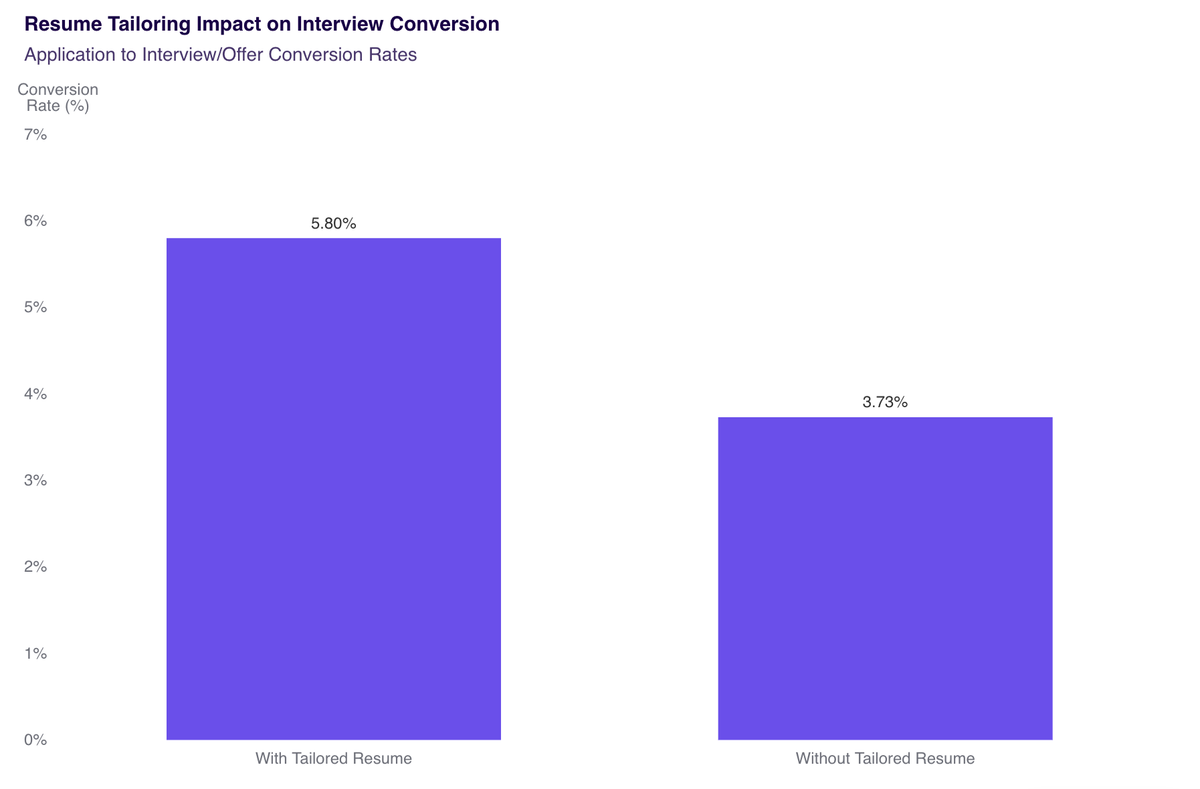
Tailored resumes using an AI resume builder can achieve about a 6% application-to-interview conversion rate. One interview for every 17 applications. That's 6x the rate of job seekers I've met who use ChatGPT alone and report less than 1% after hundreds of tries. And that interview rate is improving over time.
ChatGPT vs. AI Resume Builders: What's the Difference?
Here's the honest version: Someone skilled with ChatGPT who knows what to feed it and is willing to spend many hours prompting and iterating can make a resume as good as anything built with an AI resume builder. It's the same core models underneath.
The gap is knowledge. At Huntr, we know more about what makes a resume good because we've studied 1.7 million applications. We've met with hundreds of job seekers, and we've invested 10,000+ design and engineering hours in building the AI resume builder product. We track what gets interviews and what doesn't.
With ChatGPT, you're on your own. You need to know what to ask, how to set it up, what to check, and what to fix. Most people don't. Most people try one prompt, one pass, and get back a resume that looks okay but says nothing real.
Here's what a one-shot ChatGPT resume gets wrong
If you just copy and paste a job description and a resume into ChatGPT, you are doing what hundreds of other applicants are also doing. The results are generic because the context and input are generic. Here's an example and a breakdown.
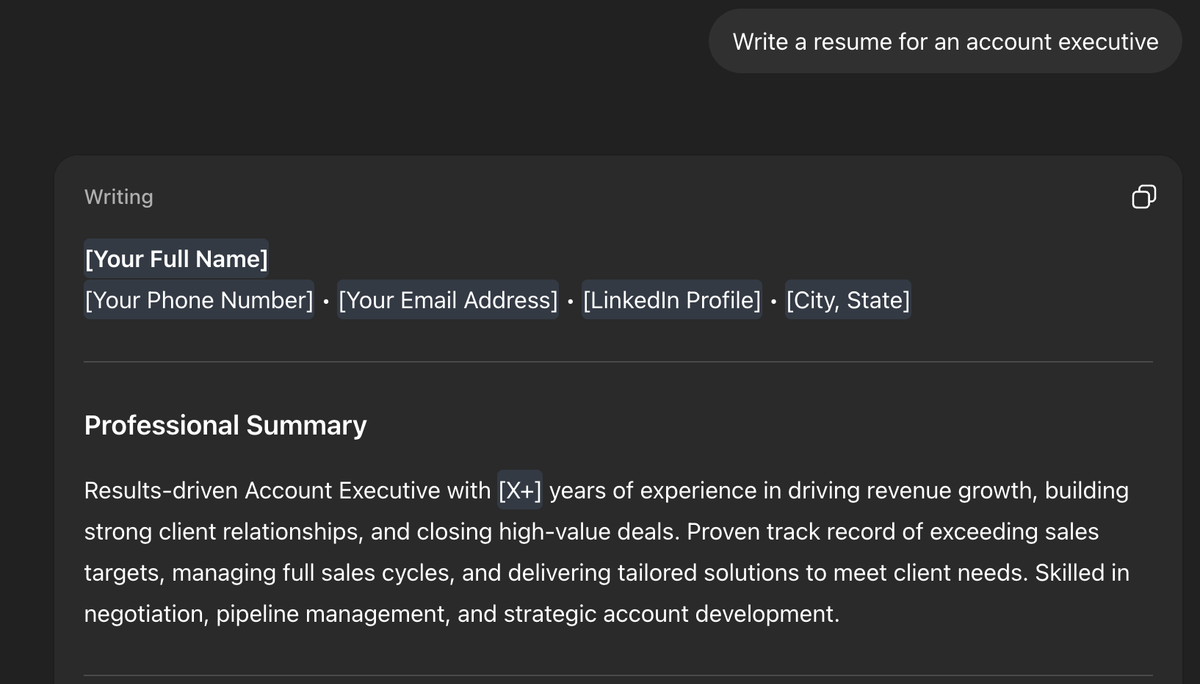
- Summary: Could belong to anyone in your field.
- Bullets: Loses your real numbers. Makes up stats. I've seen it put "$12 million in enterprise sales" on a resume for someone who never closed over $50k.
- Skills: Pulls terms from the job posting, whether you have them or not.
- Voice: Sounds like every other ChatGPT resume.
When using Huntr, you still have to bring the facts. But the system knows what to do with them.
How to Use AI to Tailor Your Resume to a Job Description
Tailoring your resume to match a job description can get you 60-100% more interviews, based on Huntr's job search trends data. One interview for every 17 tailored applications versus about 1 in 33 on average for a non-tailored resume.
Here's how to do it well: With ChatGPT or a purpose-built AI resume builder tool.
Start with your skills
Pull the skills from the job description and match them to your real work. With Huntr's Chrome extension, you can grab skills straight from a job posting and drop them into your resume.
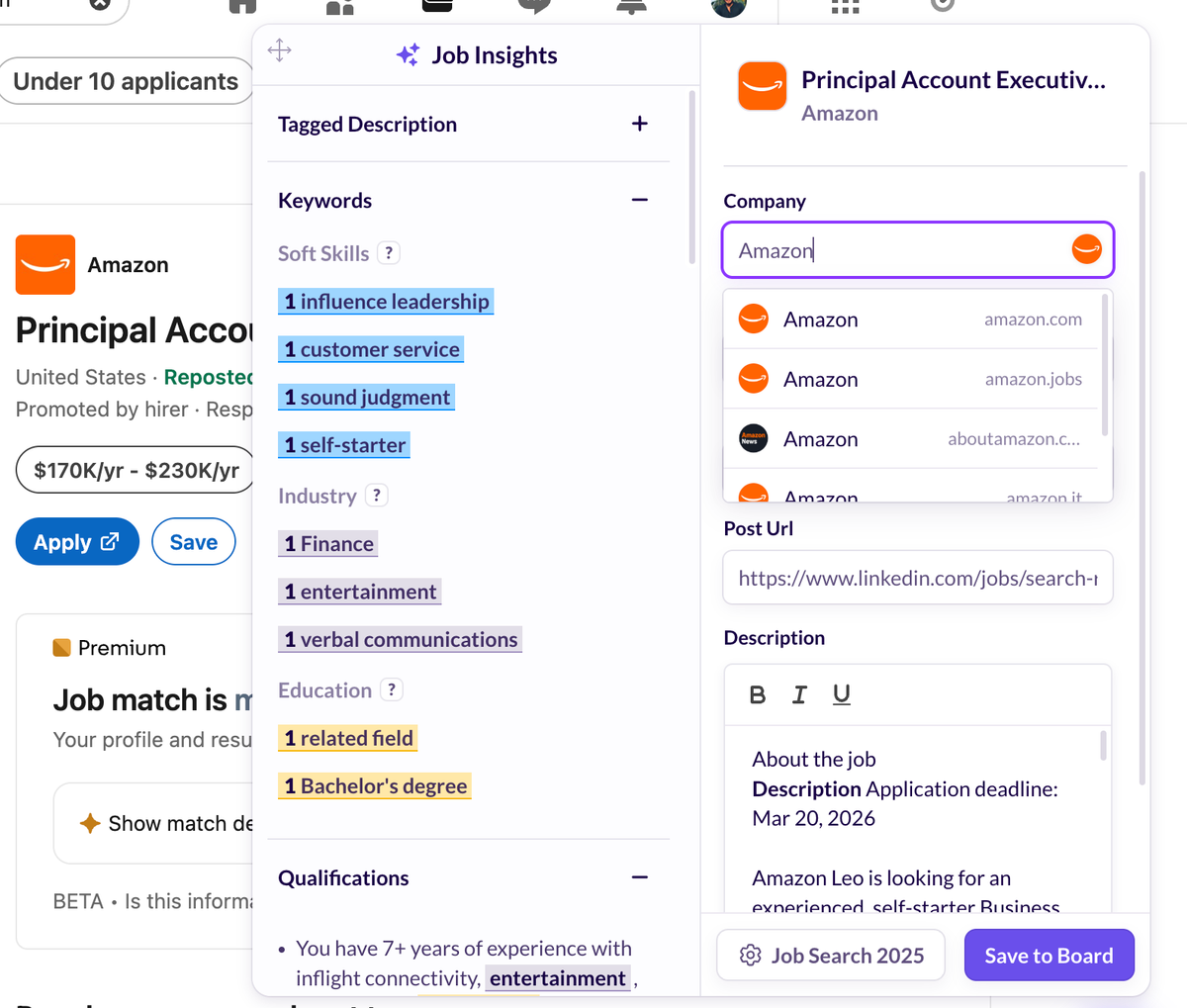
Don't worry about listing too many skills; interviewed resumes average 20-30 skills. Just make sure they match the job description and cut out any that aren't relevant.
Lead with the right resume summary
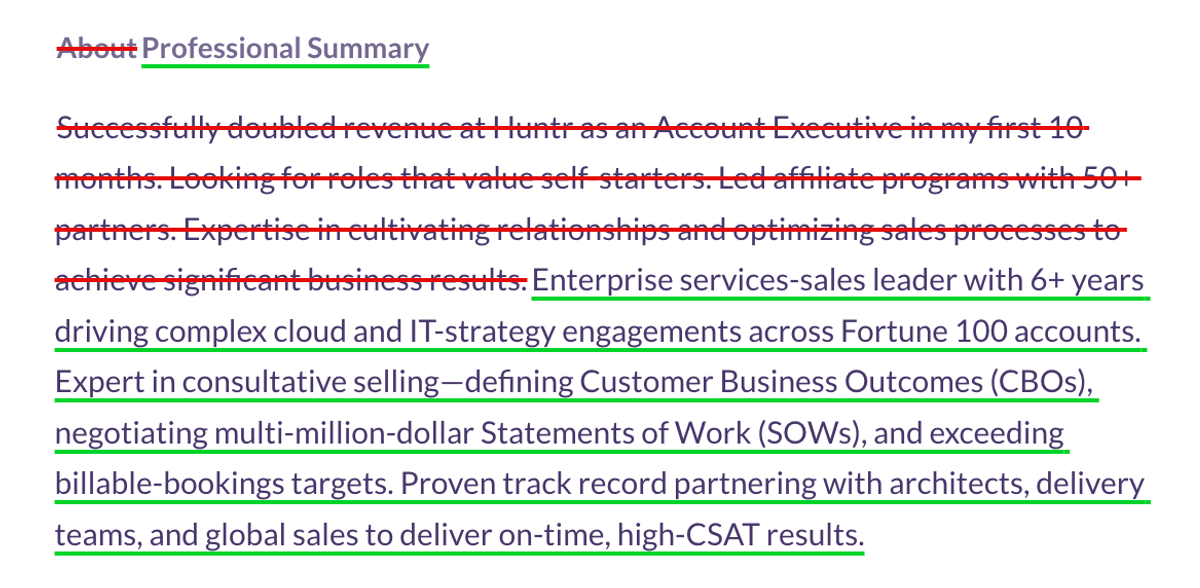
Your summary's first sentence should be an aggregation of the most impressive thing you have done in your career, as it ties to this job. Not a string of adjectives. Not "results-driven professional." Not simply listing your years of experience. Share a thing you did that would make a recruiter stop and read.
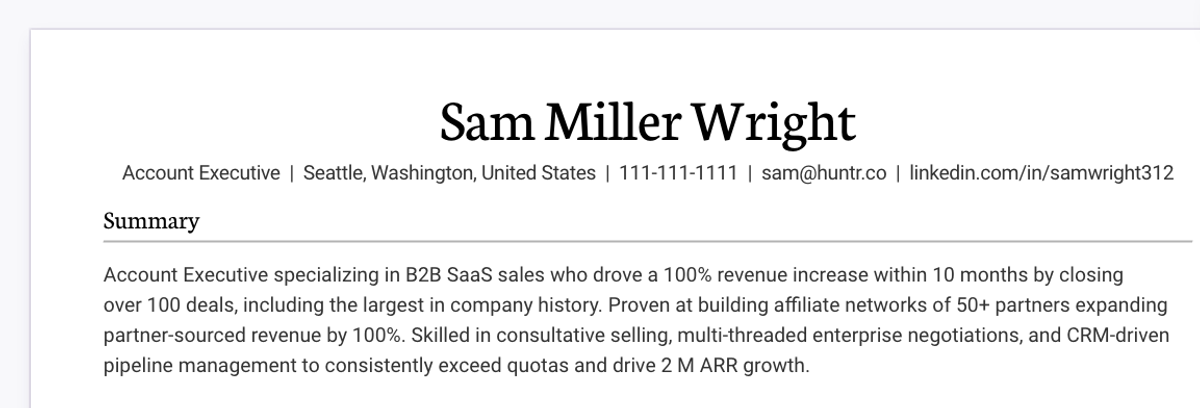
Here's an example and a caveat: If your biggest win is "doubled revenue at a startup," that's a strong line for a startup job. But if you're applying to an AWS account executive role, doubling revenue at a 10-person company doesn't hit the same way. AI, when set up right, can help you see that gap and pick the win that fits the role. This is something I honestly missed. Thanks, AI.
Use the XYZ format for resume bullets, but mix it up
Each bullet should say what you did (X), what it led to (Y), and (when you can) why it mattered (Z). Most people skip Z, but it can provide more context on the impact you had on the team's and/or organization's goals.

But don't write all five bullets the same way. Did X, led to Y, saved Z five times in a row, reads as if a machine wrote it. Recruiters get the ick.
Lead some bullets with the result. Let others breathe. Change the beat. This is frustrating to many, but there is an art to the resume, and we need to put ourselves in the head of a recruiter or hiring manager who may be biased against resumes built with AI.
Fill out your education
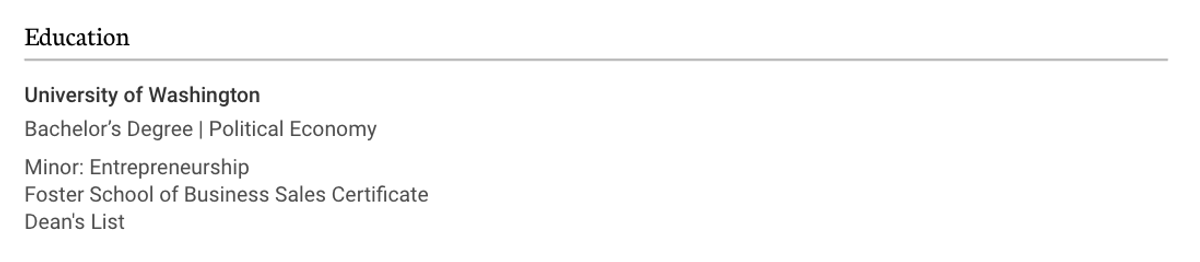
Add projects, awards, tools, and outcomes. It helps more than most people think, according to the resume insights from our job search trends data. Most professionals who went to college can share more context and potentially connect with the resume reader (hiring manager/recruiter)
What Recruiters Actually Think About AI Resumes
I've talked to dozens of recruiters this year. Here's what they say:
- There's no "AI resume" or "non-AI resume." There's a good resume and a bad resume. The tool doesn't matter. The output does.
- Recruiters spot bad AI, not good AI. Joanne, a recruiter specializing in hard-to-fill niche roles, told me that AI resumes are "becoming identifiable" only when done poorly. People who come in with bland AI copy often need a full rewrite. The ones who use AI well? Recruiters can't tell, and don't care.
- They scan fast. Cameron, a senior TA, described her process: A quick look at the top for interest, a scroll to the bottom for school, then a review of companies, titles, and how long you stayed. You have seconds.
- 9 out of 10 resumes are still bad. After 600+ reviews, I can tell you: the problem isn't AI. Most people, AI or not, skip the basics.
- The ATS myth is overblown. 70% of job seekers think AI screening systems reject them. Every recruiter I have ever spoken to has told me that's not how it works. An ATS works like a search engine. Recruiters type what they want, and it filters. No hidden AI is turning you down. Sometimes they don't even use the filters and just look at the most recent applicants.
How to Tell If a Resume Looks AI-Generated (and How to Fix It)
Recruiters are starting to spot patterns. Scott, an IT recruiter, warned me about people who leave ChatGPT prompts in their resumes, a careless mistake that gets you cut right away. This is why you need to always check the AI's work and fix any glaring issues.
Common signs of an AI-generated resume
- It opens with "results-driven," "seasoned," or "detail-oriented." These are the words ChatGPT falls back on to create a generic summary. If your summary starts with any of these, even if you have written it, it reads like AI.
- The numbers are oddly exact. "Increased efficiency by 37.2%." "Reduced churn by 14.8%." Real work doesn't produce numbers like that. Real numbers are round or come with a story. Strange precision gives it away. Make sure that all the numbers you put on your resume can be backed up in an interview.
- Every bullet has the same format. Five lines of "Led X, resulting in Y% increase in Z." Same format, five times. Real resumes vary: Some bullets lead with the result, some describe the work, and some run longer, explaining less quantifiable achievements that are still relevant.
- It claims things you didn't do. If you can't defend a line in the interview, the model fills a gap with a guess. Cut it. Don't accept AI hallucinations to misrepresent you.
How to fix it
Read your resume out loud after any AI tool writes it. If a line doesn't sound like something you'd say in an interview, rewrite it. Keep your numbers. Keep your facts. Make sure the voice is yours.
Why You Should Never Use AI Auto-Apply Tools
This might be the most important part of this article.
Auto-apply tools, bots that send your resume to dozens or hundreds of jobs on their own. hurt your search in ways you can't see.
Cameron, Senior TA, told me recruiters see every role you've applied to at the same company inside their system. When someone shows up with 15+ applications for different roles, it suggests to the recruiter that you lack focus. You don't know what you're good at. You're throwing your name at a wall using poorly written applications to do it.
When one of those mass applications gets turned down, and most will, you now have a rejection on file. When a role that fits you opens up later, the recruiter sees your name next to a trail of nos. Your name is already marked in their ATS system.
The math fails, too. Auto-applying with a generic resume gets you near zero calls. Hundreds of tries. Nothing back. You'll waste time and money getting little results.
Data-Backed Job Search Advice
Apply to 10-15 jobs per week. Tailor every resume. Pick one target job title and stick with it for a month. That's what our data says works.
Why You Should Never Use AI to Lie on Your Resume
44% of job seekers say they're willing to lie during the hiring process to get an interview using AI. That's from our 2025 Job Search Trends Report.
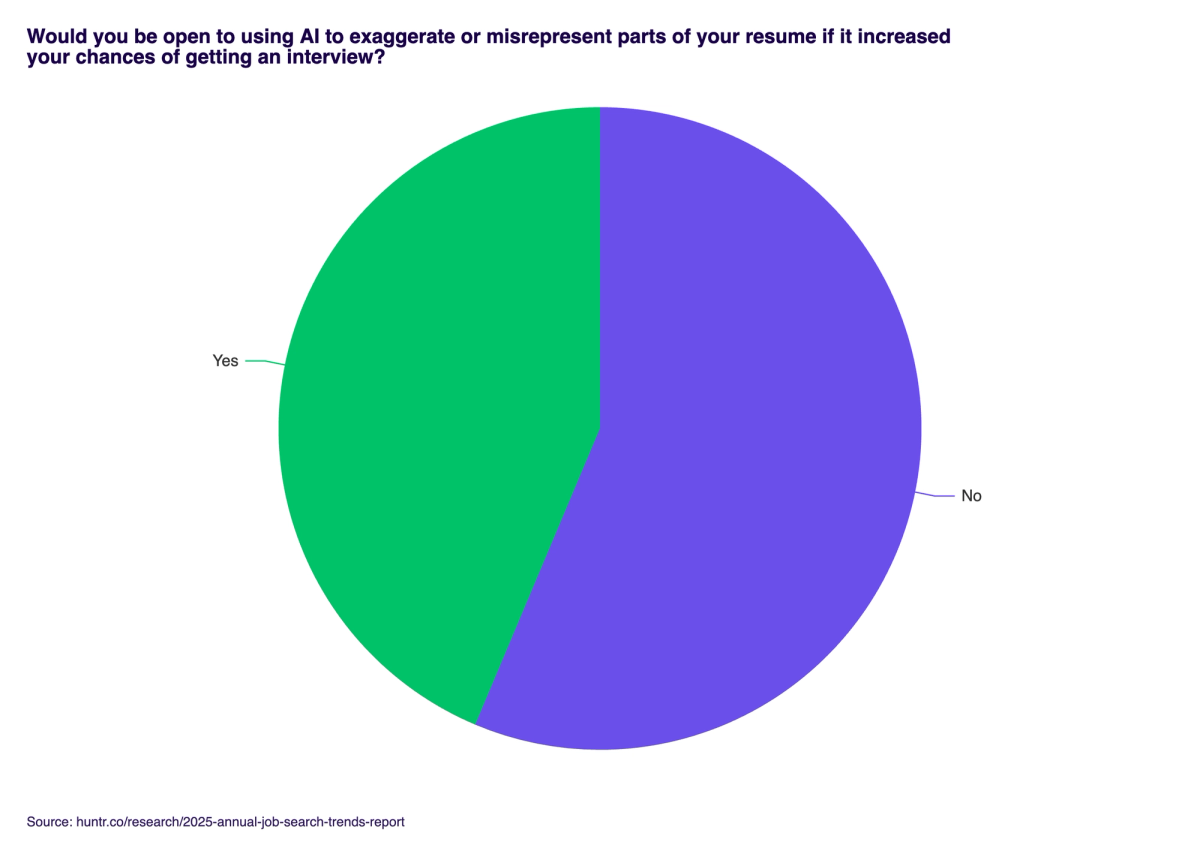
Don't.
These tools make it easy to fake accomplishments. You paste a job description, and ChatGPT builds a version of you that's perfect for the role, with numbers you never hit and skills you don't have. It feels fine because the output looks clean.
But recruiters say they can catch lies on resumes.
And here's what people forget: You have to defend every line in the interview. If a bullet says you "reduced customer churn by 18% through a retention program you designed and led," you'd better be ready to explain how. When you can't, the interview is done. And so is your shot at that company. Even if you do get the job, you will have to live with the lie for your whole career. It isn't worth it.
AI should help you say what you've done more clearly, helping you to put your best foot forward. Not help you claim what you haven't done.
The Right Way to Use AI in Your Job Search
AI is not going away. The question isn't whether to use it. It's how.
Here's what I tell the 600+ job seekers I've worked with:
- Use AI to tailor, not to build from nothing. Start with your real work. Give the tool your facts, your numbers, what you actually did. Let it help you match your words to the job description. Don't let it write your career for you without context. Career coaches and resume writers can also help with this.
- Use a tool trained on what works. ChatGPT knows a bit about everything. Huntr knows one thing: what gets people interviews. 1.7 million applications. Three engineers. Two years. One goal: Increase your application-to-interview conversion rate.
- Don't skip the human step. AI gets you most of the way. The rest is you: Reading the output, cutting what doesn't sound right, making sure every claim is real, making sure the voice is yours. Career coach Kathy Caprino told me, "A resume is a reflection of how you see yourself." If you can't see yourself in it, neither can a recruiter.
- If you're not getting interviews, stop and figure out what the problem is. One of two things is happening: 1. You're going after the wrong role, there's a real gap between the job and your work, or 2. Your work isn't being described well enough for the role you're right for. The first is a fit problem. The second is a wording problem. AI can help with wording. It can't fix a bad fit.
- Track your results. Know your rate. If fewer than 3 in 100 applications lead to an interview, something is off. If you're at 6 or higher, you're doing well in this hiring landscape. Let the numbers guide you.
Your resume is not something you can fully automate the process of writing and forget (yet). Right now, resumes are still important, and better data and tools can help you gain an edge in a competitive hiring landscape.
FAQ: How to Use AI in Your Job Search
What is the best way to use AI in a job search?
Use AI to tailor your resume to each job description, not to build a resume from scratch. Give it your real facts: Your actual numbers, jobs, and skills, and let it match your language to the job posting. Don't use it to generate content you can't back up in an interview. The biggest gain comes from tailoring: our data from 1.7 million applications shows tailored resumes get one interview for every 17 applications, versus one in 33 for untailored ones. That's double the rate.
Does ChatGPT write a good resume?
It can, but only if you know how to prompt it well. Used with one prompt and no structure, ChatGPT defaults to the average of the resumes it's been trained on, and the average resume is skipped. It opens with "seasoned results-oriented professional," invents numbers you never hit, and pulls skills from the job posting, whether you have them or not. Someone skilled with ChatGPT who feeds it the right context can get good results. But that takes time and expertise most people don't have. A purpose-built AI resume builder like Huntr does that work for you.
What is an LLM, and how does it affect my resume?
LLM stands for large language model. ChatGPT, Claude, Gemini, and Grok are all LLMs. They work by predicting the next word based on patterns in their training data. They don't understand your career or what a hiring manager wants; they guess what word should come next. For resumes, this means they give you the most common phrasing, not the most accurate or effective one for your specific situation (without proper prompting)
What's the difference between ChatGPT and an AI resume builder?
ChatGPT is a general tool. It helps everyone with everything, which makes it less precise for any one task. An AI resume builder like Huntr is built for one purpose: getting you more interviews. Huntr's resume review runs through 28 steps, including many prompts to help you get a quality resume. The tailoring tool runs 5 more steps to match the job description. Every step is informed by data on 1.7 million applications. ChatGPT lacks a specific dataset of successful resumes.
Can recruiters tell if a resume was written by AI?
They can tell when it's done poorly. Recruiters spot AI resumes that open with "results-driven" or "seasoned," use oddly precise numbers like 37.2%, or write every bullet in the exact same format. One recruiter told me they've seen people leave ChatGPT prompts on their resumes. When AI is used well, giving it real facts, checking every line, varying the format, recruiters can't tell, and don't care. There's no such thing as an AI resume or a non-AI resume. There's a good resume and a bad one.
What is resume tailoring, and does it work?
Resume tailoring means adjusting your resume to match the specific job description you're applying to: Using their language, highlighting the skills they ask for, and leading with the achievement most relevant to that role. Based on data from 1.7 million applications, tailored resumes get 60-100% more interviews than untailored ones.

Sam Wright
Sam Wright is the Head of Career Strategy at Huntr. Drawing on proprietary data from 1.7 million applications, 1 million job postings, 243,000 résumés, and a 1,049-respondent survey, Sam provides actionable, data-driven blueprints to help professionals navigate today's fractured hiring landscape. He has conducted over 900+ free support calls with job seekers, giving him frontline insight into today's job market. His work and insights have been featured in Business Insider, The Wall Street Journal, Forbes, and The Seattle Times.
Outside the tech world, Sam is a part-time farmer from a five-generation legacy of organic vegetable farming. He is a passionate advocate for farmland preservation.
Get More Interviews, Faster
Huntr streamlines your job search. Instantly craft tailored resumes and cover letters, fill out application forms with a single click, effortlessly keep your job hunt organized, and much more...
AI Resume Builder
Beautiful, perfectly job-tailored resumes designed to make you stand out, built 10x faster with the power of AI.
Next-Generation Job Tailored Resumes
Huntr provides the most advanced job <> resume matching system in the world. Helping you match not only keywords, but responsibilities and qualifications from a job, into your resume.
Job Keyword Extractor + Resume AI Integration
Huntr extracts keywords from job descriptions and helps you integrate them into your resume using the power of AI.
Application Autofill
Save hours of mindless form filling. Use our chrome extension to fill application forms with a single click.
Job Tracker
Move beyond basic, bare-bones job trackers. Elevate your search with Huntr's all-in-one, feature-rich management platform.
AI Cover Letters
Perfectly tailored cover letters, in seconds! Our cover letter generator blends your unique background with the job's specific requirements, resulting in unique, standout cover letters.
Resume Checker
Huntr checks your resume for spelling, length, impactful use of metrics, repetition and more, ensuring your resume gets noticed by employers.
Gorgeous Resume Templates
Stand out with one of 7 designer-grade templates. Whether you're a creative spirit or a corporate professional, our range of templates caters to every career aspiration.
Personal Job Search CRM
The ultimate companion for managing your professional job-search contacts and organizing your job search outreach.
Huntr
Blog Product Updates Resume Skill Guides Resume Examples Interview Question Guides Research 2025 Job Search Trends Report Affiliate Program Careers Privacy policy Terms of service Write for us LinkedIn Reddit r/HuntrCo Twitter @TryHuntr Email UsProduct
Job Tracker AI Resume Builder Resume Tailor Resume Checker AI Cover Letters Resume Summary Generator Resume Bullet Generator Resume Skills Generator Resume Headline Generator Resume Keyword Scanner Job Keyword Finder Targeted Resume Contact Tracker Interview Tracker Job Search Metrics Job Application Autofill Resume Storage AI Resume Review Job Clipper Resume Optimization ChatGPT Resume Builder Resume Fixer LinkedIn Resume Builder AI Resume Rewriter Interview Question Generator